Could the Petrol Stations run out of fuel?
David Vance SubstackRead More
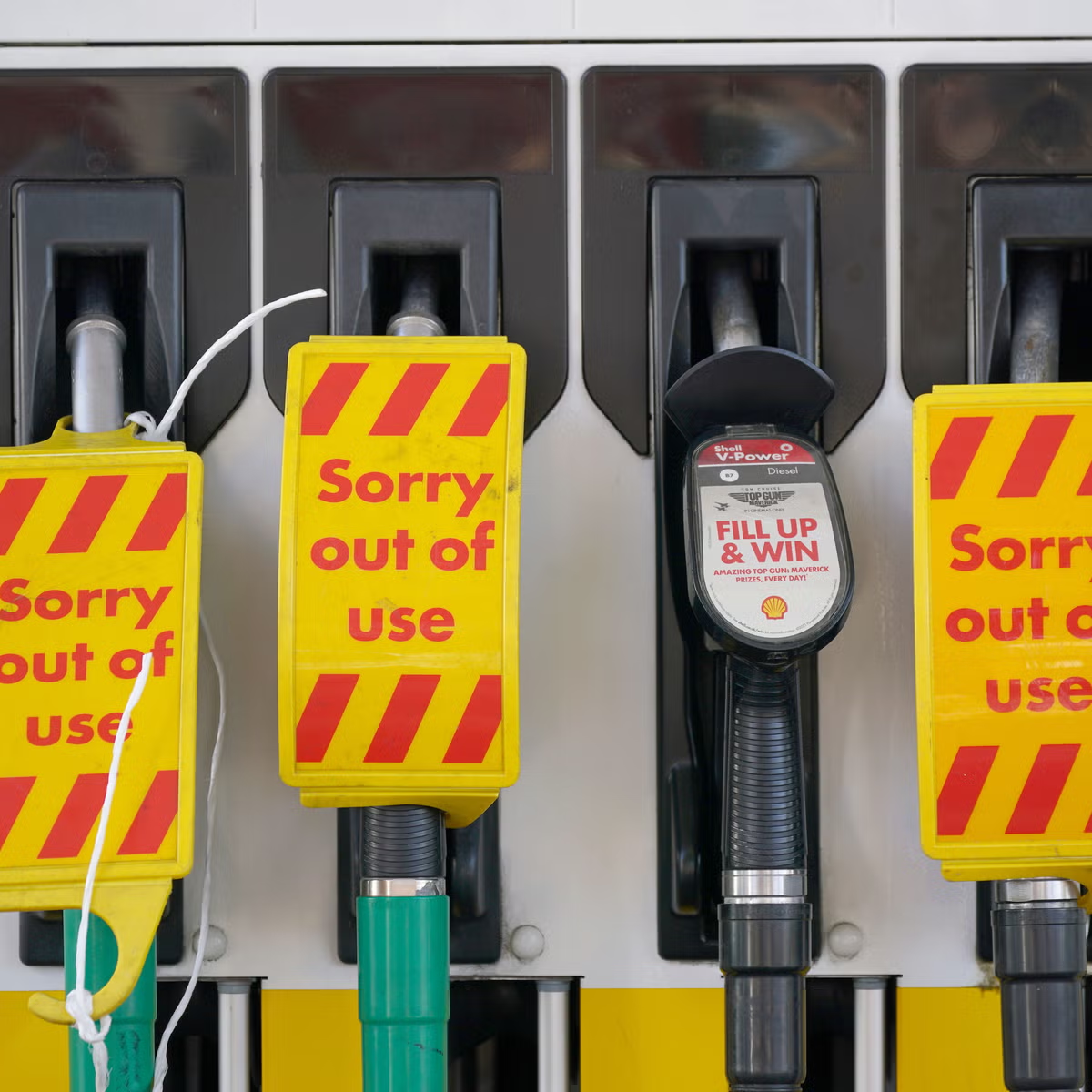
I visited my local Sainsbury’s forecourt to fill up with petrol this morning. It was closed – awaiting deliveries. The same thing happened to my wife yesterday. She went back to her local Tesco forecourt and managed to get petrol, however there was no diesel. I also filled up with petrol later today at a local petrol retailer and noticed they had no kerosene. So, is the UK experiencing a serious supply problem and is the Government hiding this from us? Is it possible that we could find ourselves facing fuel rationing?
Australia is rapidly heading towards this very problem! Recent reporting says Australia’s overall fuel supply is still just about maintained, yet hundreds of stations have run out of at least one type of fuel, especially in New South Wales and Victoria. This is having devastating impacts. Could it happen to us?
We know that the our government is monitoring stocks, refinery data, port arrivals, and retail forecourts. If shortages start to become more obvious appear, expect ministers to try softer measures for starters: public appeals against panic buying, coordination with fuel suppliers, temporary protection for critical deliveries, and adjustments to transport logistics.
Rationing would be considered only if those steps failed to keep the system stable.
If the situation worsened, the government could activate emergency powers to control how fuel is distributed. In practice, that would mean setting priorities. Essential users such as emergency services, hospitals, food distribution, utilities, agriculture, and some public transport operators would likely come first. Ordinary motorists would be placed lower down the list and could face limits on how much they can buy per visit or over a set period.
A rationing scheme could be done in several ways. One model is a purchase cap, where each driver is allowed only a fixed amount of petrol or diesel, such as a daily or weekly limit. Another is a priority permit system, where designated users receive guaranteed access and everyone else buys from what remains. A third option is controlled distribution to maintain continuity for key sectors while restricting general retail sales. The exact method would depend on how severe the shortage is and how quickly officials think supply can recover.
The hardest part is not just setting the rules but enforcing them. The government would need petrol stations, haulage firms, police, and local authorities to work together, while also managing public confidence. Once drivers fear scarcity, they panic and rush to fill up tanks, which can make the shortage worse.
I think that things are much more volatile than the Government is pretending and things are going to get much tighter for the motorist!