
Britain’s FGM Shame – Genuflecting to Islam?
David Vance SubstackRead More
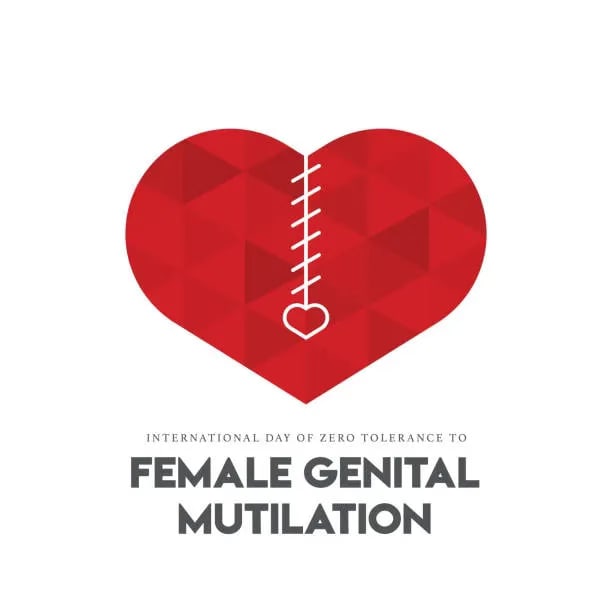
Despite bold words and sweeping legislation, the UK authorities continue to fail thousands of women and girls at risk of female genital mutilation — a crime that is as violent and traumatising as any you can imagine.
For decades now, politicians here have proclaimed zero tolerance for FGM, imposing heavy criminal penalties and broadening the law to cover offences committed abroad. It is a CRIME. Yet this legal framework is rendered powerless by a shocking lack of prosecutions. The message to the culprit is clear: the likelihood of getting caught is vanishingly small so just keep on cutting away. Why might this be?
NHS figures reveal that from 2015 to 2024, more than 37,000 individual women and girls received treatment for FGM-related injuries,. There were over 100,000 attendances recorded. Yet despite this evidence of widespread harm, only two successful prosecutions for performing FGM has been recorded in the UK. Two. In fact from 1985-2025, there have only been a few successful prosecutions. This is an unspoken national scandal.
One thing that shocked me as I researched for this article is that there are no official UK-wide statistics on the religious affiliation of FGM victims. The NHS and government do not record religion—only country of origin, ethnicity, and perhaps language. That’s cowardly and we all know why! FGM in the UK is primarily associated with communities from countries where the majority population is Muslim (such as Somalia, Sudan, Eritrea)
In some UK community studies, the overwhelming majority of girls at risk of FGM are from Muslim backgrounds, reflecting migration patterns from FGM-practicing countries, but as I say there is no reliable published figure stating the exact % of UK FGM victims who are Muslim.
Both Muslim leaders (such as the Muslim Council of Britain) and leading FGM campaigners insist that FGM is not an Islamic mandates requirement and that it is condemned by most Islamic scholars. This may be true but there is another big issue here.
The horn of Africa has the highest prevalence of FGM in the world, including in its most severe forms. Islamic texts are often used to justify FGM in this region; this despite the fact that the majority of the world’s Muslims do not practice it. So those immigrating to the UK from this region are the people who are engaging in this. Stop that immigration and you start to address the issue.
There is also a culture of secrecy presiding over this topic. The practice is sometimes euphemistically called “cutting” or “female circumcision” It’s conducted behind closed doors, often on children who are terrified to speak out, in communities reluctant to expose trusted elders. The “cutting season,” when families travel abroad for rituals, remains an open secret.
Law enforcement struggles to penetrate this wall of silence. Mandatory reporting from healthcare or school professionals, introduced in 2015, has not led to real accountability. The communities that carry it out stay mute,
But the consequences of inaction are profound. FGM causes irreversible pain, trauma, and lifelong health complications. Girls are robbed of dignity and sometimes their futures. Support services exist — clinics, hotlines, dedicated NGOs — but these work after the fact, patching up bodies and spirits that the law failed to protect.
Without real deterrence, without prosecutions, the UK’s commitment to end FGM remains rhetorical. That’s not good enough.
We need more than awareness campaigns. We need police, prosecutors, and policymakers who are willing to do the hard work: to investigate, to support victims in speaking out, and to pursue justice without fear or favour.
Protection must begin before the blade slices — not just in clinics and crisis hotlines, but in communities, schools, and homes. FGM is not a “cultural tradition.” It is a vile crime. The absence of significant prosecutions is an injustice. It is time to act — not just talk.