

Reforming Immigration!
David Vance SubstackRead More
Q. How do you know that Reform has come up with a good idea?
A. All the other political parties have a hissy fit and tell us that it is unworkable and racist.
Yesterday saw Reform UK unveil a groundbreaking immigration policy. At its core is the abolition of Indefinite Leave to Remain, a relic of past leniency that has allowed unchecked migration to balloon. It has to end. This isn’t just tinkering—it’s a comprehensive overhaul forcing approximately 800,000 legal migrants to reapply under stringent new criteria.
What are these criteria?
Well, a minimum salary threshold of £38,700 ensures only those who contribute meaningfully to the economy can stay, while tougher English language tests demand integration into British society.
Foreign-born nationals would be barred from welfare benefits, social housing, and non-emergency NHS care, projecting savings of a staggering £234 billion over a generation.
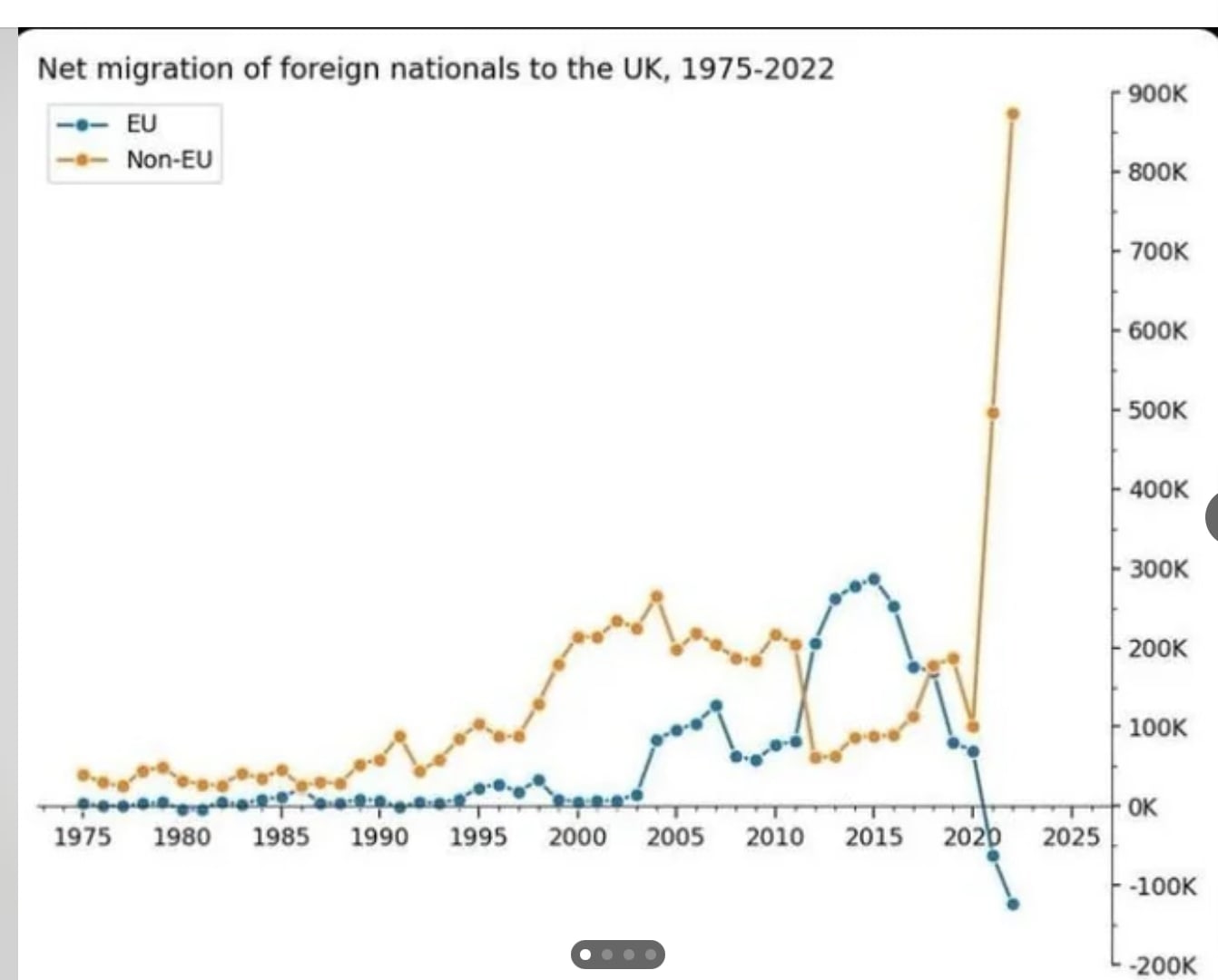
This seems to me like a pragmatic response to the post-Brexit migration explosion under Boris Johnson’s watch. It’s dealing with terrible consequences of the “Boris Wave”! Remember all his promises of “taking back control”? Instead, net migration soared to over a million annually, straining public services and diluting the very sovereignty voters endorsed in 2016.
Reform’s vision tries to restore that control, prioritising British taxpayers who foot the bill for an overburdened system. Why should hardworking British families subsidise newcomers who haven’t proven their worth?
Critics, predictably, howled. London Mayor Sadiq Khan decried it as “discriminatory,” while Liberal Democrat clown leader Ed Davey warned of NHS staff shortages and economic sabotage. These are the same voices that championed open borders, ignoring the human cost: overcrowded schools, skyrocketing rents, and GPs turning away locals. They have a brass neck!
Farage’s plan is also merit-based. The salary threshold isn’t arbitrary; it’s aligned with the UK’s median wage, ensuring migrants match or exceed what natives earn. Stricter English tests foster genuine community ties, reducing isolation and boosting productivity. This seems based to me.
Barring access to non-essential services isn’t cruelty but fairness. Emergency care remains open to all but welfare and housing are finite resources; reserving them for citizens incentivises self-reliance amongst newcomers, echoing successful models in Australia and Canada.
The usual critic decry all this as “unworkable,” but implementation is straightforward: phased reapplications with grace periods, digital tracking via existing Home Office systems. It’s time to put Britain first, not out of spite, but necessity.
As Farage rightly said; “This is our country, and we’re taking it back—for good.”