

Why Mahmoud Abbas Should Not Be Allowed into the United States!
David Vance SubstackRead More
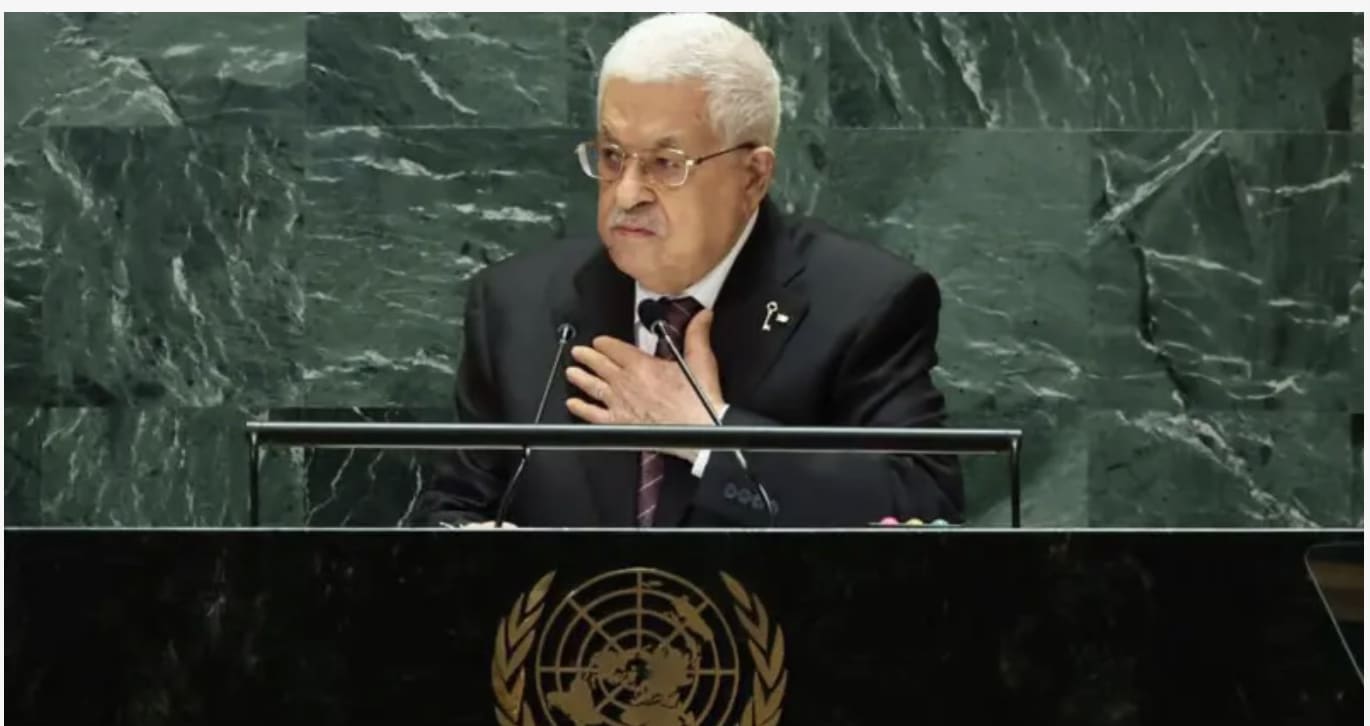
Anyone who remembers the era of Yasser Arafat will be clear enough on the “qualities” of Mahmoud Abbas, the man who succeeded him. Cut from the same cloth.
Abbas, Palestinian President and leader of the Palestine Liberation Organisation, has long been a controversial figure. His planned attendance at the UN General Assembly in New York has just been thwarted by the U.S. State Department’s decision to deny or revoke visas for him and 80 other Palestinian officials. This action, announced by Marco Rubio, underscores compelling reasons why Abbas should not be permitted entry into the United States. Ever.
These reasons include things like national security, legal obligations, and the broader pursuit of Middle East peace.
First and foremost, Abbas’s leadership has utterly failed to unequivocally repudiate terrorism, a requirement under U.S. law for engaging with Palestinian entities. The October 7th Hamas-led attack on Israel, exemplifies the kind of violence that the PLO and Palestinian Authority have not consistently condemned.
It was reasonable for Rubio to explicitly stated that before the PLO and PA can be considered partners for peace, they must “consistently repudiate terrorism—including the October 7 massacre—and end incitement to terrorism in education, as required by U.S. law and as promised by the PLO.” Who can disagree that? Well, probably the majority of the absurd UN members!
Despite Abbas’s public statements distancing the PA from Hamas, the lack of action against them raises legitimate security concerns. Allowing Abbas entry could signal tacit U.S. approval of leaders who tolerate or indirectly enable terrorist activities. (I would suggest Gerry Adams be banned for the same reason.)
Secondly, Abbas’s pursuit of unilateral actions undermines negotiated peace processes, violating commitments made by the PLO. The U.S. has criticised Palestinian officials for seeking “the unilateral recognition of a conjectural Palestinian state,” which bypasses direct talks with Israel.
Abbas has actively pushed for international recognition of Palestine, now acknowledged by 147 of the UN’s 193 member states. He has supported legal cases against Israel at bodies like the International Court of Justice.
Rubio has emphasised that the PA must “end efforts to bypass negotiations by pursuing legal cases against Israel at international courts.” This approach rewards intransigence rather than fostering dialogue, as evidenced by Israeli Prime Minister Benjamin Netanyahu’s rejection of a two-state solution, arguing that such recognition would reward “Hamas’s monstrous terrorism.” You can see his point.
By denying Abbas entry, the U.S. upholds its policy of conditioning engagement on genuine peace efforts, preventing the legitimisation of strategies that sideline bilateral negotiations.
Thirdly, this decision aligns with U.S. strategic interests amid heightened global tensions. Admitting Abbas might embolden factions like Hamas, increasing risks of further violence.
Some critics argue that this ban violates the UN Headquarters Agreement, which mandates facilitating access for foreign officials “irrespective of relations.” However, U.S. sovereignty over visas supersedes this, especially when national security is at stake. The UN is in the US and must defer to US sovereignty on the issue of visas.
Abbas’s office has expressed “astonishment,” claiming it contradicts international law, but the U.S. prioritisation of counter-terrorism trumps such obligations. The UN spokesman hoped for resolution to ensure representation, yet this does not negate the substantive reasons for denial.
Barring Abbas protects U.S. security, enforces legal standards against terrorism, and promotes authentic peace negotiations. His track record makes him an unsuitable visitor. This firm stance reinforces America’s commitment to a stable Middle East free from extremism. Abbas, like Arafat, is just another thug in a suit.