Robert Winston: Beware the three-parent baby hype
David Vance SubstackRead More
The BBC gleefully published this headline this week: ‘Babies made using three people’s DNA are born free of hereditary disease’.
Its news website reports:
“Eight babies have been born in the UK using genetic material from three people to prevent devastating and often fatal conditions, doctors say.”
The issue that is being tackled using this treatment is incurable mitochondrial disease.
But – and there is always a but in science – what if by tweaking one part of the DNA, you inadvertently introduce other problems in the DNA?
That is the problem.
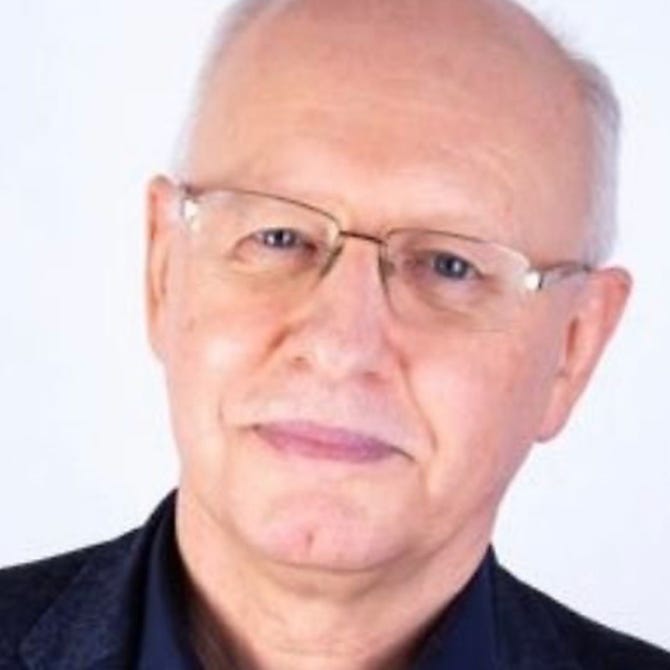
This is IVF pioneer Robert Winston writing on February 23, 2020. Note the use of the word DNA in the headline used by The Sunday Times ‘Robert Winston: eugenics has evil in its DNA’.:
“Technologies such as Crispr enable us to introduce bits of new genes into chromosomes, thus transforming the disease risks and characteristics of individuals. This will soon become possible in humans. Indeed, one totally unethical experiment has already happened in China.
“Scientists are now giving credence to the idea that we could abolish hereditary diseases using this technology.
“In my view, this is impossible because it will require screening the genome of entire populations. Many people would be unlikely to accede to this.
“This suggestion fails to recognise that many genetic defects, not present in the parents, occur during the actual process of reproduction. [This is why intervention is so dangerous.]
“This means that unless every individual contemplating a pregnancy had their embryos screened through IVF [which contains risks itself], it would be quite impossible to eradicate such defects.”
I hope I don’t need to decode every single part of that extract from that piece written by Professor Winston.
Perhaps the most important phrase he uses is that “many genetic defects, not present in the parents, occur during the actual process of reproduction”.
New interventionist risk is being mixed in with pre-existing risk to create a cocktail of more unknown risks.
The website Medical Xpress reports that:
“The technique, known as pronuclear transfer, is performed after the egg is fertilised.
“It involves transplanting the nuclear genome (which contains all the genes essential for our individual characteristics, for example, hair colour and height) from an egg carrying a mitochondrial DNA mutation to an egg donated by an unaffected woman that has had its nuclear genome removed.
“The resulting embryo inherits its parents’ nuclear DNA, but the mitochondrial DNA is inherited predominantly from the donated egg.”
To give credit to the Daily Telegraph, it actually goes back to the original debate in the UK Parliament.
Many people like to forget the controversy that greets many so-called scientific advances, but the Telegraph reminds us that about a decade ago when this was made legal in the UK:
“The idea proved controversial, with both the Church of England and the Catholic Church in England and Wales questioning whether the technique was safe or ethical.
“Experts from the Zoological Society of London warned that in 50 per cent of animal studies, faulty mitochondrial DNA had been transferred over during the procedure, while the US Food and Drug Administration deemed the process unsafe.
“In spite of the objections, Parliament approved new legislation to allow the procedure in 2015, and the first licence was granted in 2017 to Newcastle Fertility Centre, which pioneered the technique.”
You can see the long-term risk red flags all over this.
Let’s return to Professor Winston, who writes:
“Every medical procedure, however small, carries a risk. [A short sentence but worth repeating a thousand times.] Even if Crispr were a perfect technique, which it certainly is not, mistakes would be bound to occur. Once that genome was changed, the result would be permanent and passed on for generation after generation. We must recognise that our most important ethical principle requires respect for the human.”
That, again, is the key point in all this.
If the DNA has new problems added to it in addition to the problem that was supposed to be cured, it cannot be removed.
We would be stuck with a possible new problem, or problems, passed on for generation after generation.
When Professor Winston refers to the “most important ethical principle”, I suggest he is referring to primum non nocere. First, do no harm.
We seem to be collectively risking going from the frying pan into the fire by adjusting things in our DNA when we do not know the possible knock-on effects of any long-term chain reaction that might occur.
Is this really progress?