

What does Autism mean?
David Vance SubstackRead More
In recent years, autism disorder has been transformed from a niche neurological condition that only afflicted a relatively small number of people into a more broadly applied label.
Just about everyone thinks they know what it is, but do they?
Dame Uta Frith, a pioneering neuroscientist whose groundbreaking work established autism as a brain-based disorder rather than a result of poor parenting, has now voiced some very strong concerns. She sees what many of us see.
At 84, the Emeritus Professor warns that autism has become “glamourised,” with the diagnosis viewed as “desirable” by some, leading to a great dilution of its clinical value.
Frith argues that the push for “inclusivity” has stretched the autism spectrum to the point of collapse. Originally intended to encompass a range of severities, the label now includes individuals with conditions like anxiety or hypersensitivity.. They may experience social awkwardness or aversion to noise but lack the core traits of impaired communication and repetitive behaviours.
This expansion, she claims, renders the spectrum “meaningless” as a medical diagnosis, lacking a “common denominator” among those labeled autistic.
The facts back her up.
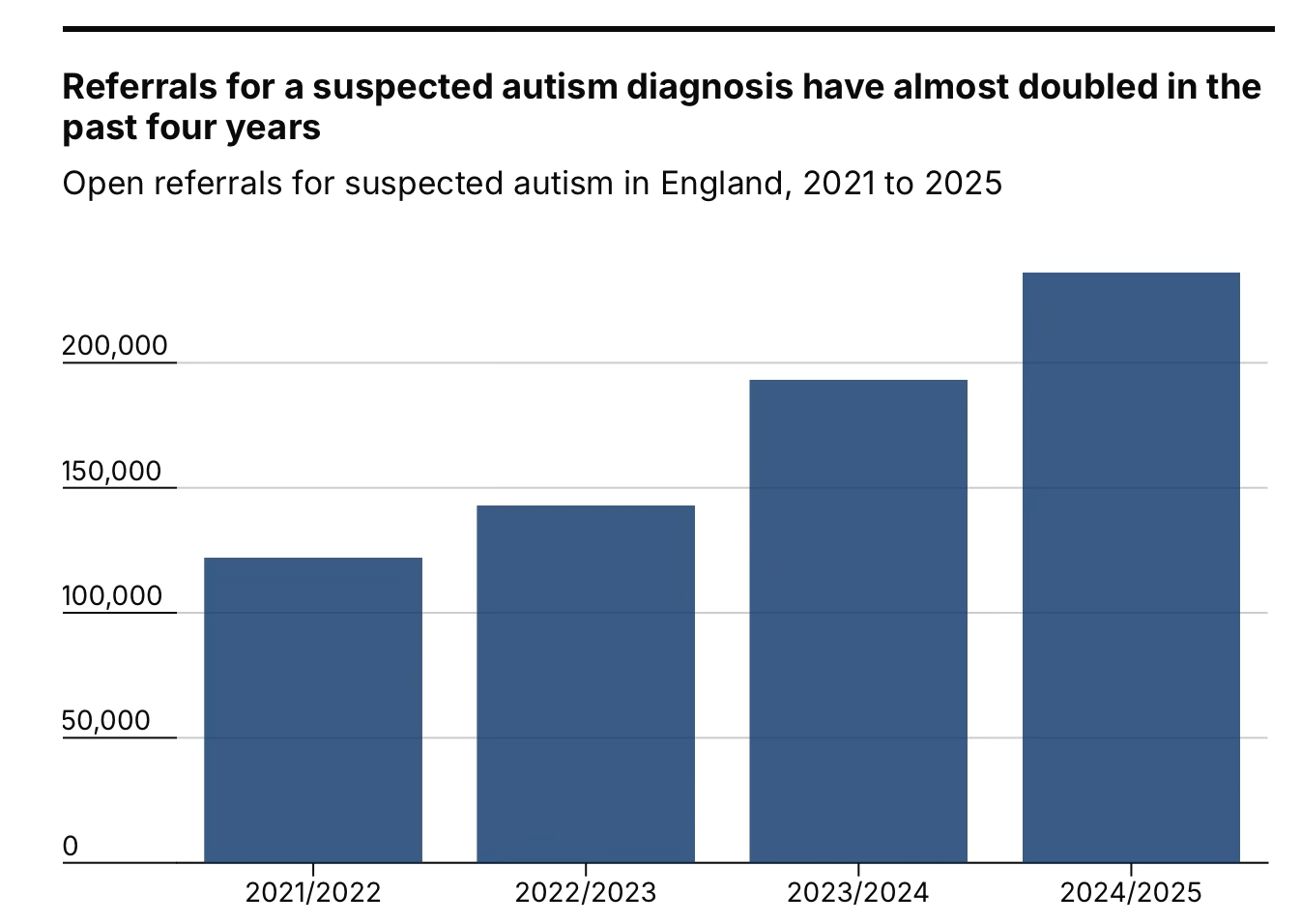
According to the Institute for Fiscal Studies, the number of schoolchildren assessed with complex needs due to autism has nearly tripled over the past decade, accounting for 40% of the surge in education, health, and care plans.
This boom has understandably strained local councils financially, pushing some toward bankruptcy amid soaring costs for special educational needs. Critics attribute this to over diagnosis, prompting the UK Health Secretary Wes Streeting to launch an independent review into rising demands for mental health, ADHD, and autism services.
Streeting initially suggested conditions were being over-diagnosed, with too many people “written off,” though he later backed of this, acknowledging the issue’s complexity.
Frith contrasts autism’s newfound appeal with stigmatised disorders like schizophrenia, noting how cultural shifts have made an ASD diagnosis almost fashionable, especially among younger women with milder symptoms.
These individuals are often verbally fluent but they report high anxiety in social settings or sensory overload. While Frith empathises with their struggles, she cautions that bundling them under autism will hinder targeted support and research.
The core group meeting “strict” criteria—those with profound social and behavioral challenges—has remained pretty stable, but the broader category’s growth risks totally overshadowing their needs.
Questioning the current framework, Frith advocates for reform: dismantling the all-encompassing spectrum in favor of subcategories.
She proposes distinct labels like “strict clinical autism,” “Asperger’s,” and separate conditions for hypersensitivity or anxiety-related traits. This, she believes, would restore diagnostic precision, ensuring resources flow to those most in need while validating milder experiences without conflating them.
Autism diagnosis have been weaponised and its time we pushed back against it all!