The FALL of the House of Starmer
David Vance SubstackRead More
The End of an Era
And so it ended—not with a bang, but with a self-congratulatory whimper. In his final speech to the House of Commons as Prime Minister, Sir Keir Starmer claimed he had left the country in a better state than when he took office following his landslide victory in the summer of 2024. The assertion was, of course, nonsense, but the real surprise lay not in the claim itself but in how quickly and completely his premiership unravelled, and what that rapid fall reveals about British politics today. This is my requiem for Starmer.
A Shallow Victory
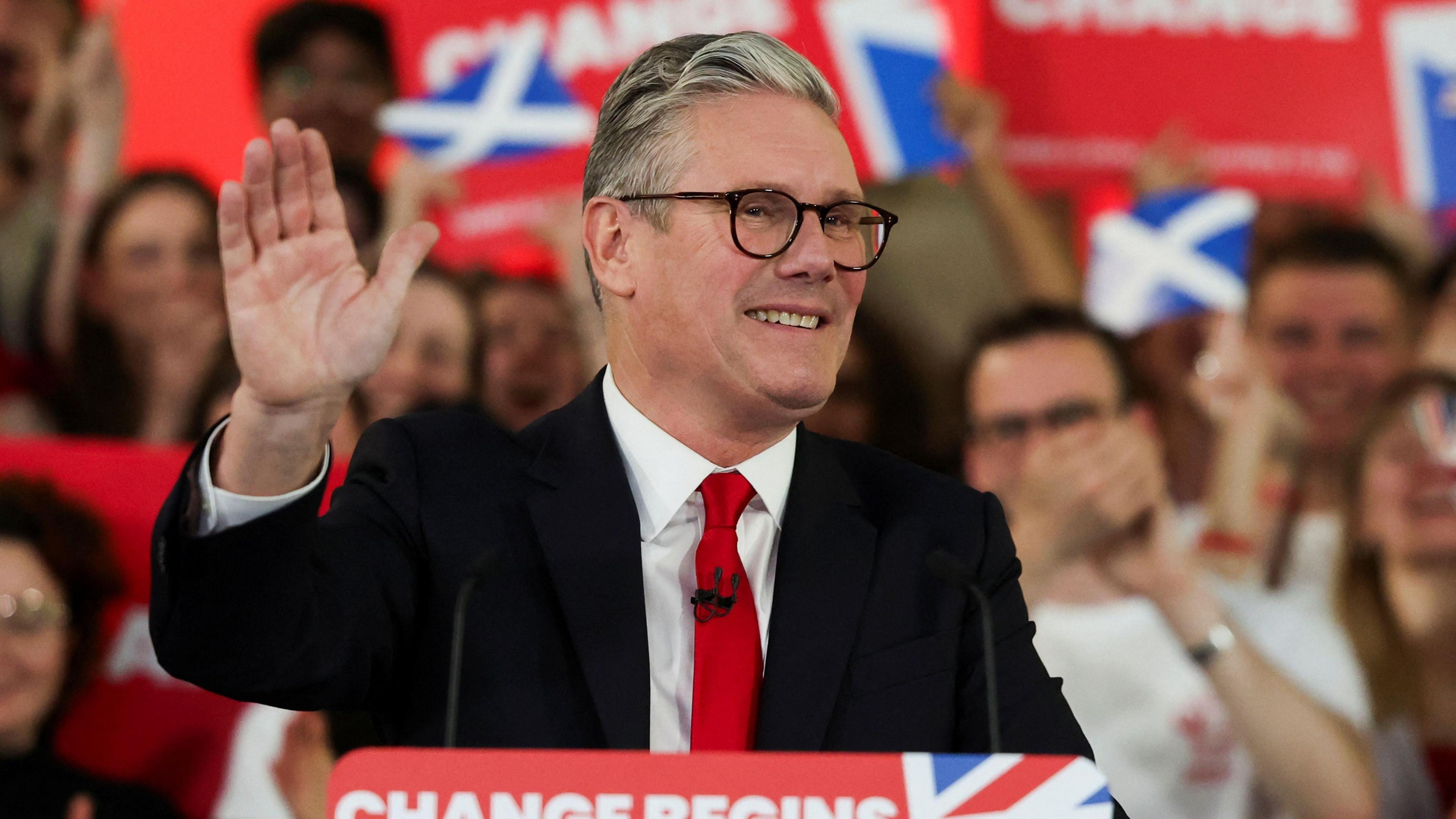
It feels like only yesterday that Labour swept to power on 4 July 2024. Sir Keir had campaigned on a promise to restore competent, drama-free government after the turbulence of the later Conservative years. On paper, the result was impressive: Labour secured 411 seats and a commanding majority.
Yet this victory rested on just 33.7% of the national vote—far lower than Boris Johnson’s 43.6% in 2019. Starmer’s success owed more to widespread disillusionment with the Conservatives than to genuine enthusiasm for Labour. It is telling that the much-maligned Jeremy Corbyn achieved nearly the same share of the vote (32.4%) in 2019.The shallow nature of that mandate proved crucial. Starmer was never widely loved; the Conservatives were simply hated. That distinction explains why his premiership collapsed so swiftly.Early
Warning Signs: Southport and the Authoritarian Turn
The decline began barely a month after he entered Downing Street. On 29 July 2024, the horrific knife attack in Southport—carried out by Axel Rudakubana, a second-generation Rwandan migrant—claimed the lives of three young girls: Elsie Dot Stancombe, Bebe King, and Alice da Silva Aguiar, while injuring ten others at a children’s dance event.

Rather than focusing primarily on the attack itself, Starmer’s government moved quickly to arrest and imprison those who took to the streets or social media in protest. The former Director of Public Prosecutions’ authoritarian instincts were immediately on display, and the public recoiled. The phrase “Two-Tier Keir” entered the political lexicon and refused to leave.
The Budget That Broke the Honeymoon
His approval ratings collapsed over the following three months.
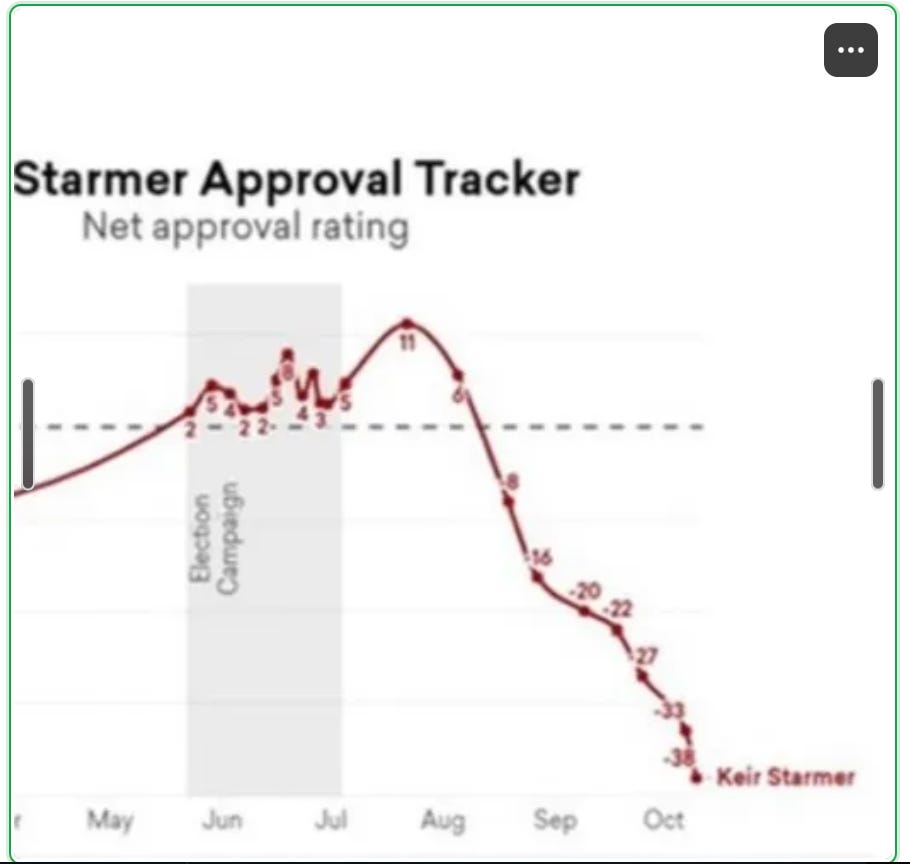
The October 2024 Budget delivered the decisive blow. Under Chancellor Rachel Reeves, the government imposed £40 billion in tax increases, including higher National Insurance contributions for employers and cuts to cold-weather payments for pensioners. The honeymoon period evaporated overnight. Starmer and Reeves appeared largely unconcerned by the growing unpopularity, and by the end of 2024 Labour was already floundering.
2025: A Year of Drift and Disaster
2025 began poorly and deteriorated rapidly. Labour initially resisted calls for a national inquiry into the Pakistani Muslim grooming gangs. In January, Starmer dismissed the demands as “jumping on the bandwagon of the far-right,” insisting existing reviews were sufficient. He performed a U-turn in June only after sustained pressure.
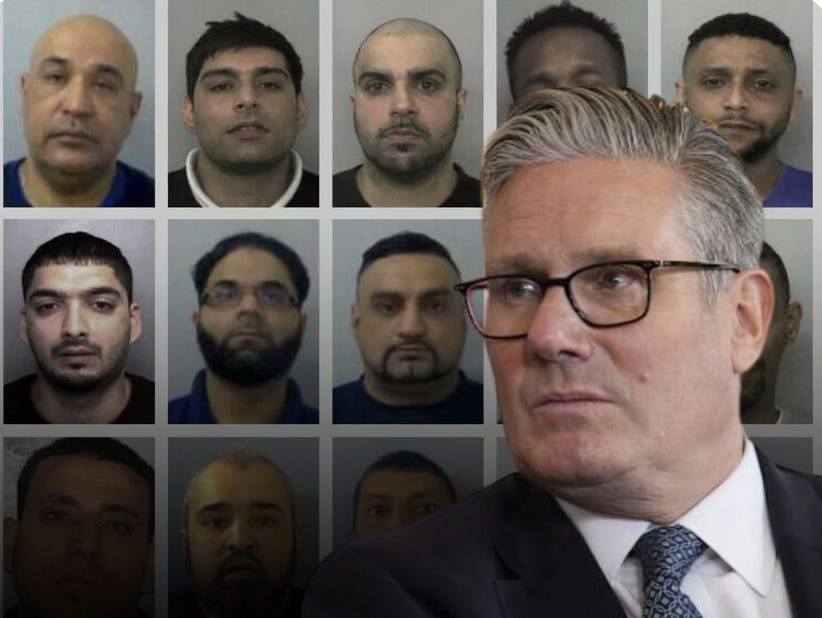
To many, this episode illustrated a defining trait of his premiership: placing party political interests—particularly the importance of the Muslim voter base—ahead of the national interest. By spring, Labour was drifting on the three central issues of the day: the economy, immigration, and the NHS. Public trust continued to erode. Despite repeated promises, small-boat crossings in the Channel kept rising, accompanied by further high-profile crimes. Starmer’s response rarely went beyond blaming “14 years of Tory chaos.” The public grew weary of the tedious deflection.
The Local Elections Red Flag Warning
The May 2025 local elections delivered a stark warning. Reform UK surged, winning 677 seats and taking control of 10 councils. The Conservatives lost 674 seats, while Labour—less than a year after its general election triumph—shed 187 seats. The loss of ground so incredibly soon after a landslide was an unmistakable red flag!
Internal Chaos and Overreach
By the summer, internal chaos reigned. On welfare reform, Starmer yielded meekly to his left-wing backbenchers, exposing a deep fault line within the party: an apparent inability to control spending because most Labour MPs opposed meaningful cuts. True to his Fabian instincts, Starmer also pursued greater state oversight of daily life.
In September 2025, the government proposed mandatory digital ID, provoking a fierce backlash over civil liberties. The plans were later diluted, but the episode reinforced perceptions of a Starmer government eager to turn citizens into “digital serfs.”
The November Budget deepened the crisis. Reeves froze income-tax thresholds and announced further steep rises—moves widely seen as breaking Labour’s 2024 promises. The government also scrapped the two-child benefit cap, adding an estimated £3 billion annually to welfare costs and signalling yet another fiscal reversal.
By year’s end, YouGov recorded Labour’s net approval rating at –57, mirroring the Conservatives’ dismal standing at the close of their own time in office.
The Mandelson Scandal and Electoral Collapse
2026 brought no respite. The shadow of Peter Mandelson—elevated to US Ambassador in early 2025 and later sacked over his Epstein connections—loomed large.
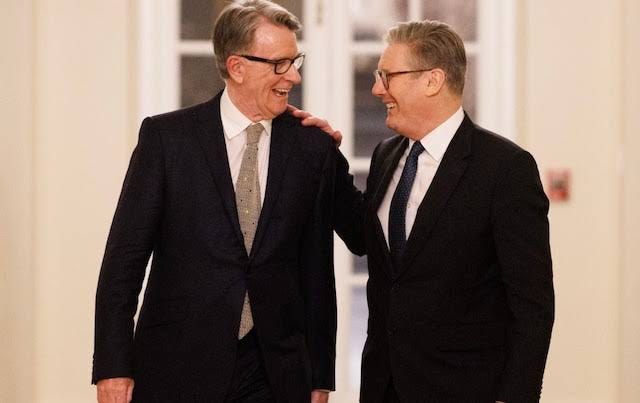
In April 2026, a report into his appointment revealed that the Foreign Office had been warned about vetting concerns yet proceeded anyway. The findings triggered fresh outrage, accusations of cover-ups, and blame-shifting across Whitehall. The timing, just before critical local elections on 7 May, could not have been worse. Labour’s results were catastrophic. The party lost around half the council seats it was defending, performed abysmally in Wales (securing just 9% of the vote), and could only tie with Reform in Scotland. This was the final straw.
The Inevitable Departure
Although Starmer initially vowed to fight on, the writing was on the wall. Rumours of a leadership challenge intensified. In June, his longtime rival Andy Burnham won a by-election in Makerfield. On 21 June, Starmer announced he would step down. Today, 16 July, marks his final day as Labour leader. On Monday 21 July, Andy Burnham will become Prime Minister. It is finally over although not without a quick visit to Kiev to see his dear friend Zelenskyy!
Legacy and Outlook
In just two years, Starmer’s premiership has come to an end. He was never widely loved and was often actively loathed. He appeared more comfortable on the international stage than grappling with domestic realities. His evident affinity for the EU and “international law” suggested a worldview more globalist than tuned to British sovereignty or even just the everyday concerns of ordinary citizens.
Few will miss his adenoidal whine at the despatch box. As Andy Burnham takes the reins and a new, more left-leaning cabinet emerges, the coming months will reveal the direction of travel. One historical pattern, however, seems enduring: Labour governments tend to conclude in chaos.
Fare you well, Sir Keir, and good riddance to you.