The 1948 Act That Changed Britain Forever
The David Vance BriefingRead More
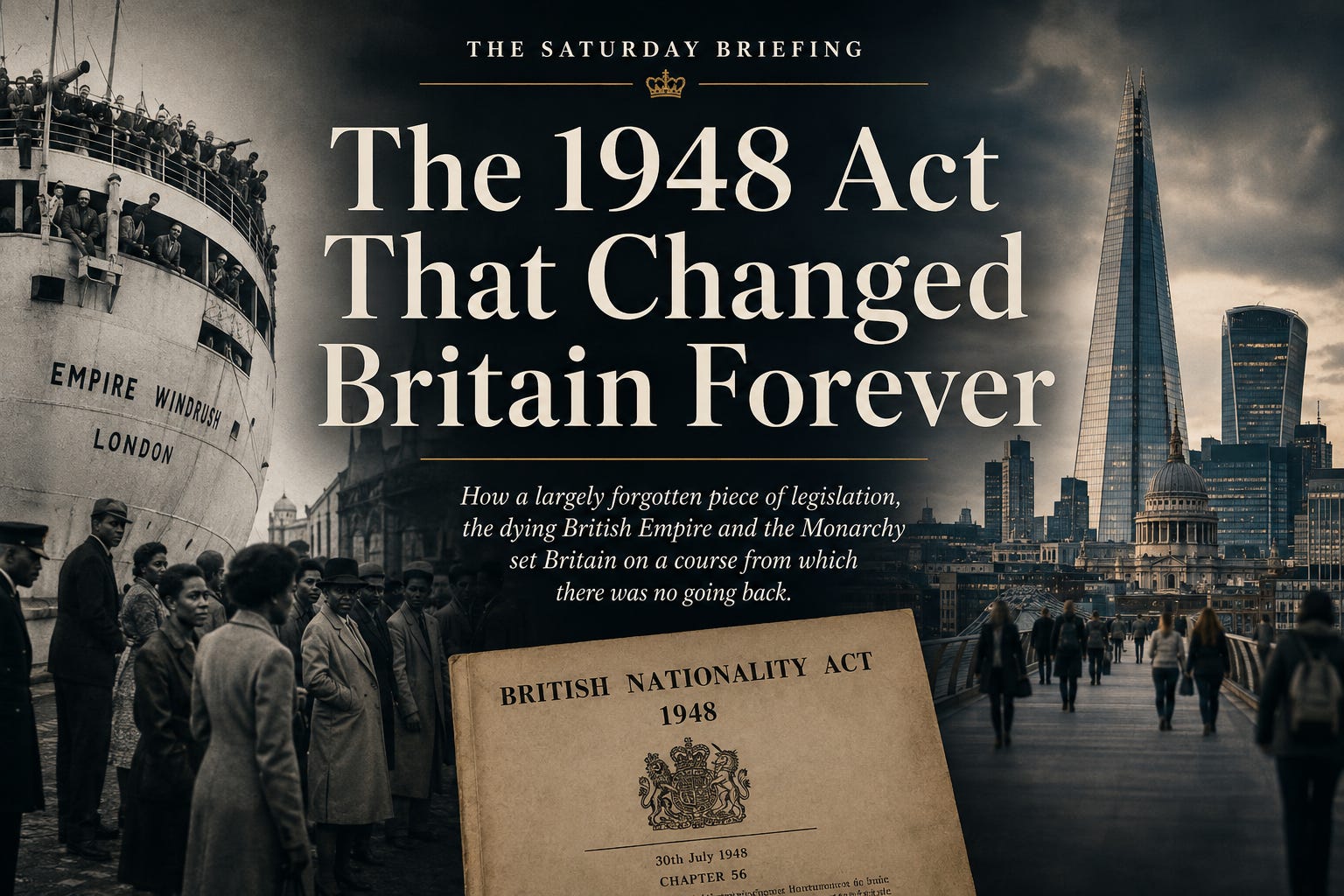
First of all, a very warm welcome to my very first Saturday Briefing!
Each week I want to take a deep dive into the issues and ideas that really matter. I want to explore certain topics in greater detail than usual and, hopefully, give you plenty to think about! That’s my plan anyway!
Lets’s kick off by accepting that some political decisions have short term consequences. Maybe most of them! Yes, they grab the media headlines and will matter for a few years and then – they don’t. Budgets come and go. Governments introduce schemes that their successors abandon. It’s the daily tide of political decision making and a lot of it is transient.
But then there are decisions which alter the character of a country forever.
I believe that the British Nationality Act 1948 belongs firmly in this latter camp and I aim to prove it!
I reckon that most people reading this will have probably never even heard of it. It definitely hasn’t received anything like the attention given to successive legislations and yet it is pivotal to our National Identity. And the mess in which we find ourselves,
If you really want to understand HOW Britain changed from the relatively uniform country that emerged from the smouldering ruins of the Second World War to the multicultural society we inhabit today, 1948 is the crucial place to start.
Come with me as we get to the heart of it all.
You see the more I looked into what actually happened back then, the more extraordinary I found it all. You see this isn’t just a story about immigration. It’s about the end of Empire; what citizenship really means; about the role of the Crown and the danger of the Commonwealth and finally, an astonishing failure to think through the long-term consequences of political decisions.
The UK emerged bloodied from WW2. We had achieved victory but at a tremendous economic cost. Yet our Nation remained at the centre of a vast global Empire. Hundreds of millions of people were still in some sort of relationship with Britain and the British Crown. It’s crucial to focus on that.
The traditional legal concept then wasn’t the same as our more modern idea of narrowly defined British citizenship.
In 1948, you were a SUBJECT of the Crown.
This worked while Britain actually possessed an Empire. But when that Empire started crumbling and then falling apart, it went pear-shaped, First, India became independent in 1947. Canada had established its own citizenship and other Dominions were increasingly independent nations. So Britain faced a genuine and existential constitutional problem that it had not had to deal with previously.
What exactly was a British subject in this new world?
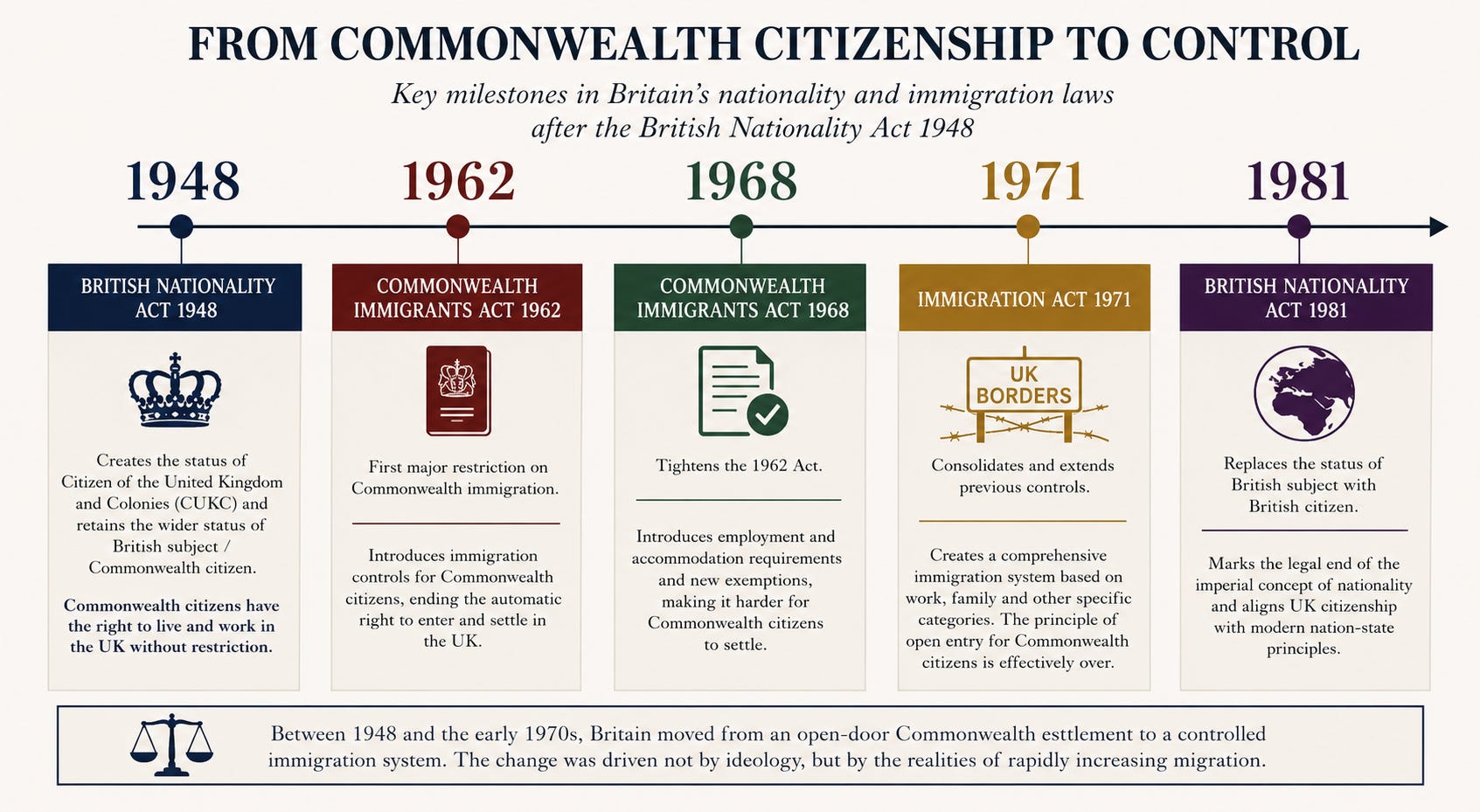
Clement Attlee’s Labour Government answered with the British Nationality Act 1948, which received Royal Assent on 30 July 1948.
This is the absolutely KEY moment in our modern history because it brought into being the new status of CITIZEN of the United Kingdom and Colonies. It also preserved the wider status of British subject/Commonwealth citizen.
This wasn’t some obscure technocratic detail. It reflected the philosophy behind the legislation. Britain was attempting to create national citizenship while simultaneously preserving the idea of a great Commonwealth family.
In my view, this was a fundamental and devastating mistake.
Britain was trying to carry an imperial conception of nationality into a post-imperial age.
THEN ALONG CAME WINDRUSH
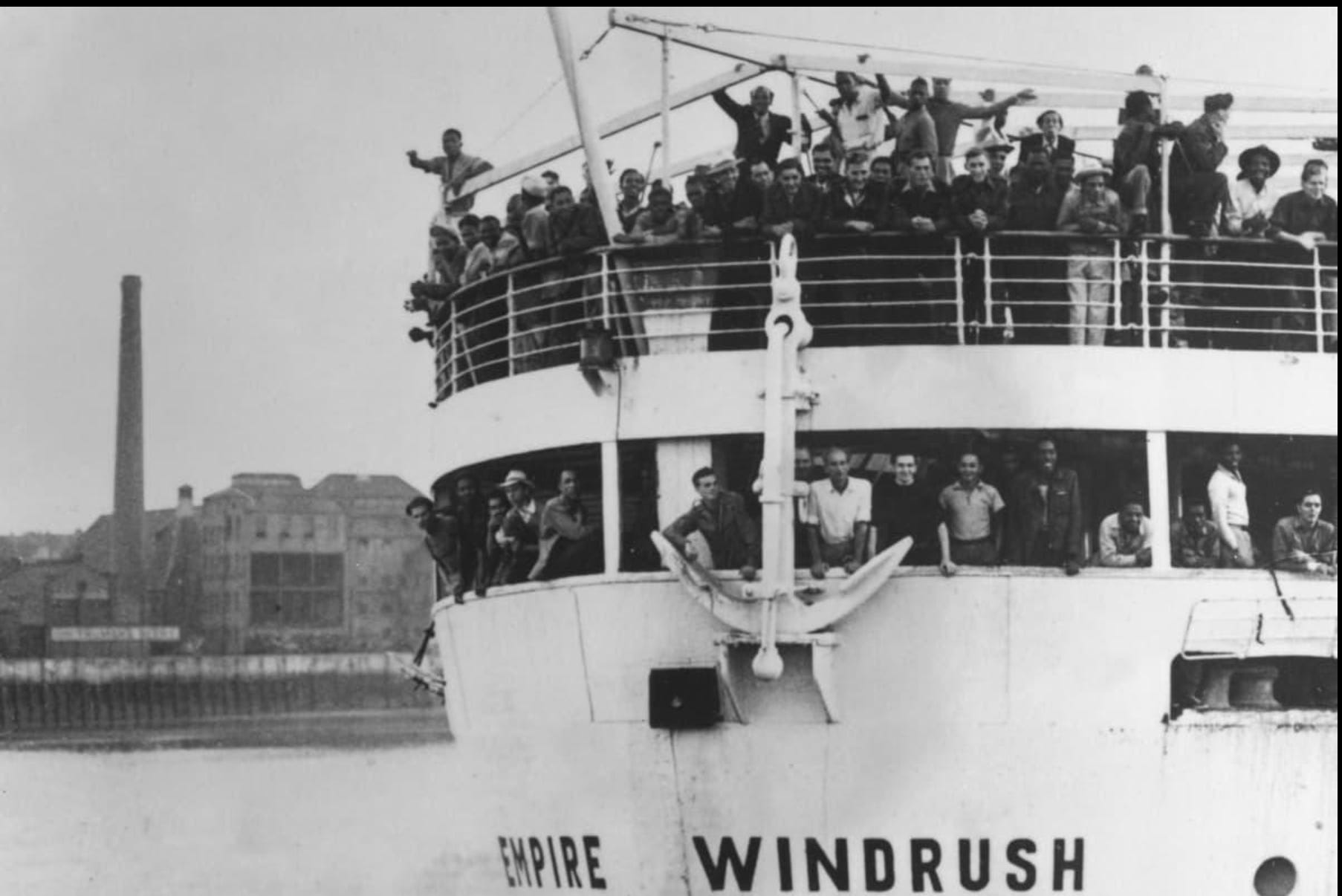
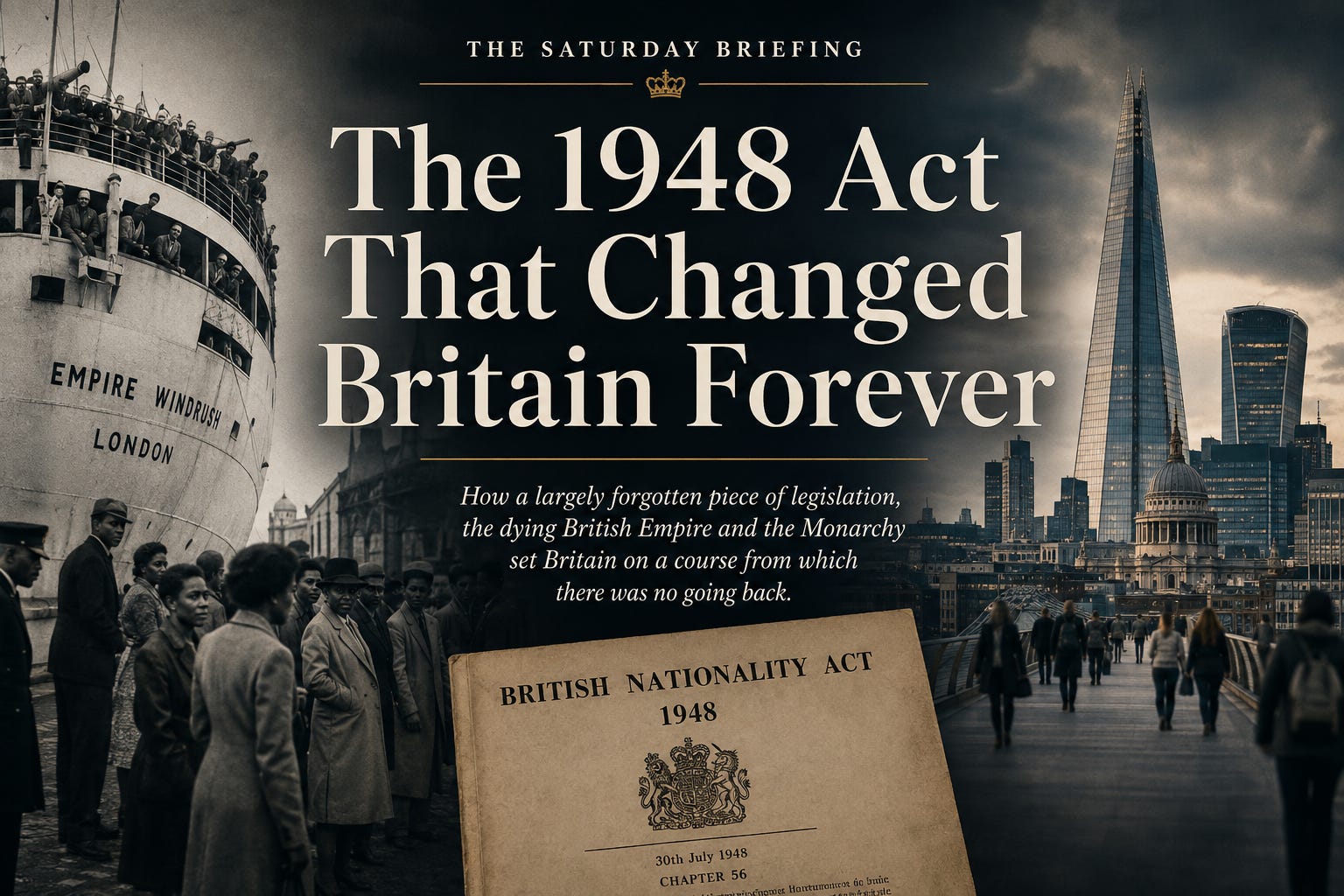
The timing is amazing. On 22nd June 1948, the Empire Windrush arrived at Tilbury Docks carrying hundreds of passengers from the Caribbean. The Nationality Act had just received Royal Assent five weeks later.
People forget that Windrush wasn’t actually the beginning of Caribbean migration to post-war Britain. Other vessels had already brought smaller numbers. But it became symbolic. Iconic.
What interests me much more is Attlee’s reaction to all of this.
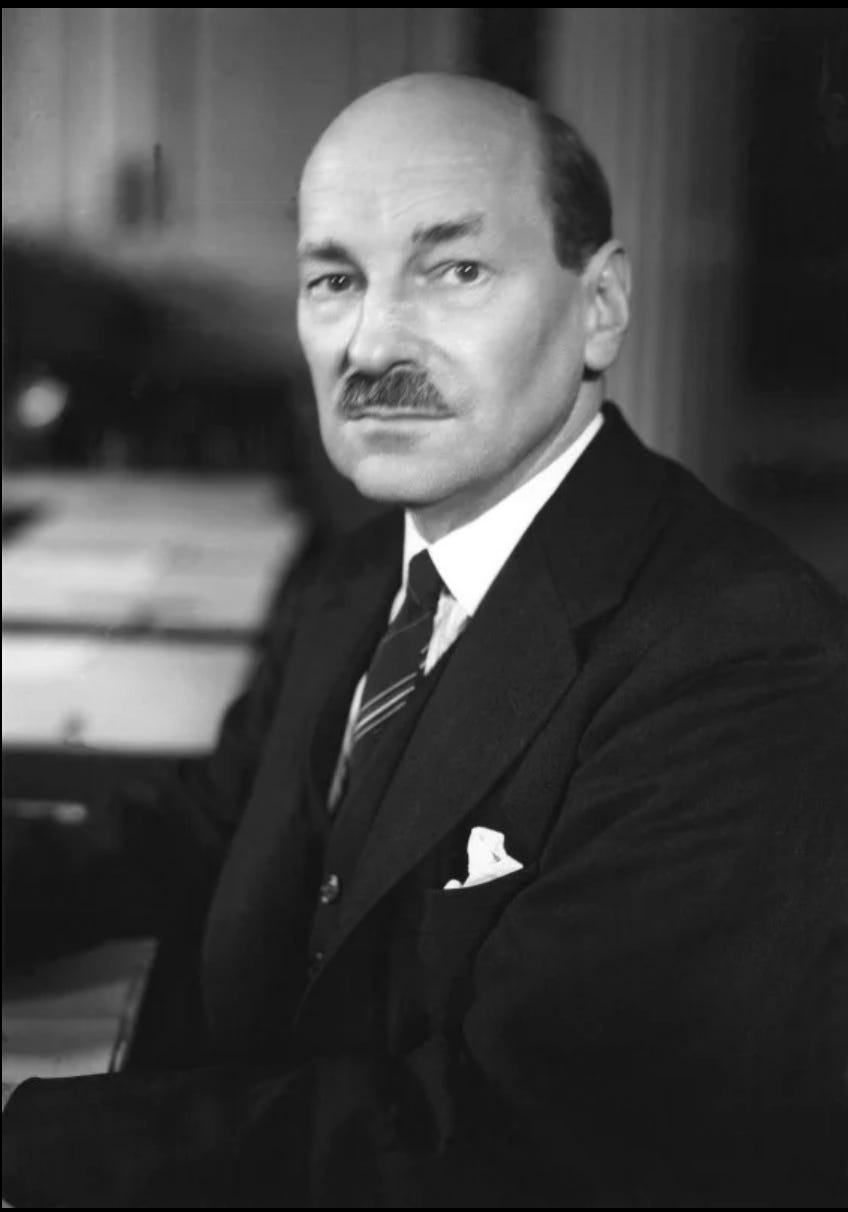
Eleven Labour MPs wrote to the then Prime Minister expressing their concern about the arrivals. They sensed something was wrong. Attlee responded on 5th July 1948.
He said it would be a mistake to take the arrival “too seriously.”
Get that? “Too Seriously”!!!
He robustly defended “the tradition” that British subjects, regardless of their Dominion or colonial origin or race, should be freely admissible to Britain.
Just think about that for a moment. This wasn’t some glitch in the matrix. These arrivals were going to be the product of it.
The Prime Minister knew the principle existed and explicitly defended it. What he apparently failed to imagine was what might happen if increasing numbers of people exercised it. Not just a few thousand but potentially millions
That is the central criticism I make of the 1948 Act. I don’t believe Attlee was mendaciously planning a multicultural Britain, he simply failed to foresee it.
Every government has a responsibility to think beyond tomorrow morning’s headlines. Attlee didn’t. And we have paid the price ever since.
WHEN THE NUMBERS STARTED MOVING
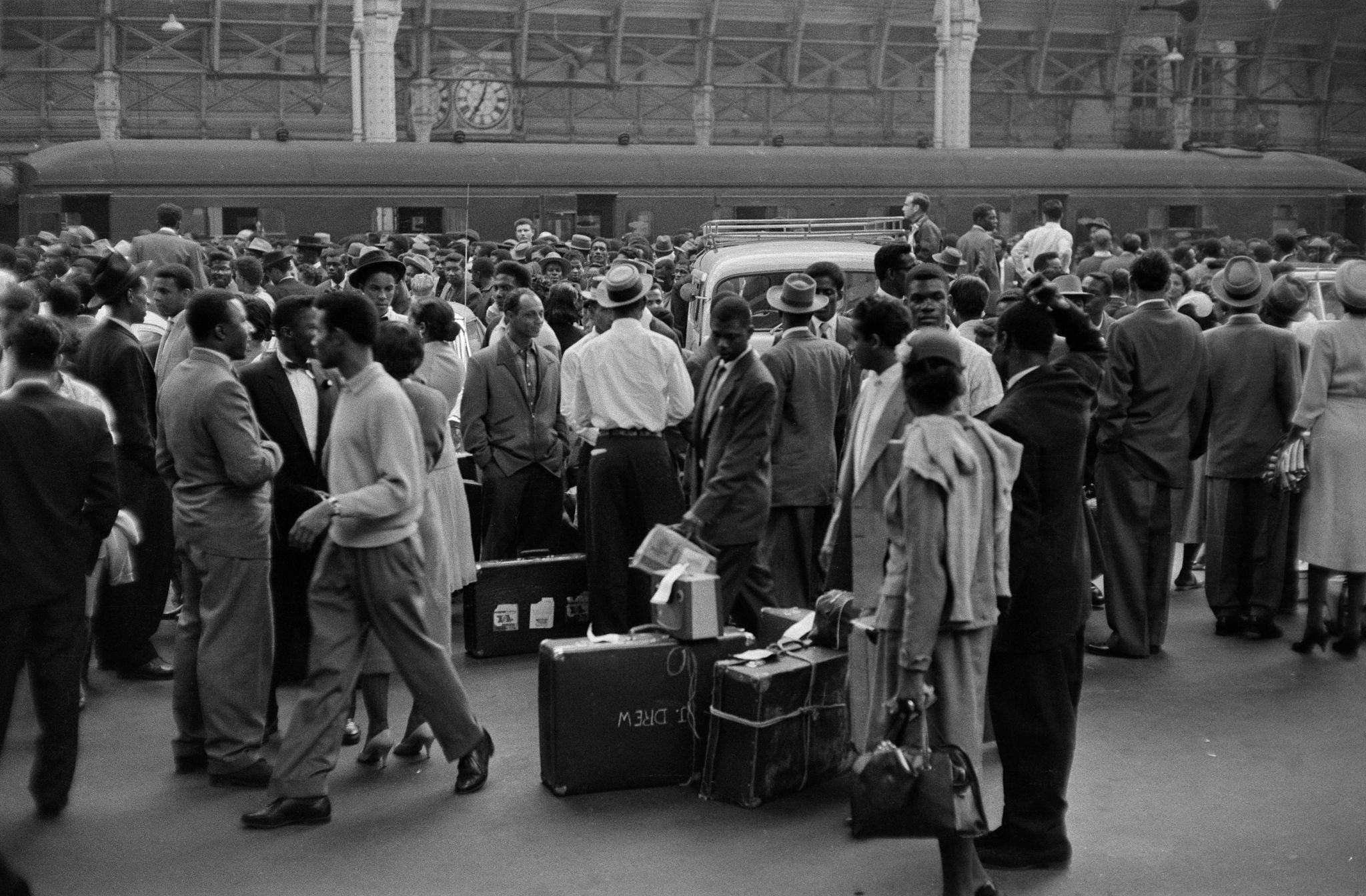
For several years after the Act, Commonwealth immigration remained relatively modest. But then there was an acceleration. The figures subsequently presented to Parliament are revealing and we can check them out in order to see what happened.
Net inward migration from the West Indies was about 27,550 in 1955. By 1960 it had reached almost 50,000. So it doubled in five years. Then came 1961.
Net migration from the West Indies now went up to 66,300. India contributed another 23,750 and Pakistan 25,100. The trickle was becoming more of a torrent.
Across all the Commonwealth territories covered by the figures, net inward migration reached approximately 136,400 in a single year. Two years previously it had been around 21,600.
And suddenly an abstract principle of Commonwealth citizenship looked very different in practice. And that’s when the politicians at Westminster panicked.
FOURTEEN YEARS LATER, THE DOOR STARTED CLOSING
Here is one of the most fascinating facts of the entire story.
The British Nationality Act was passed in 1948. The Commonwealth Immigrants Act was passed in 1962. Just fourteen years later. The 1962 legislation brought Commonwealth immigration under controls from which it had previously largely been exempt. Why?
Well, it was a direct consequence of some vaguely romantic concept of a worldwide Commonwealth family colliding with the reality of substantial migration. If the original settlement was sustainable, why was Parliament restricting it after only fourteen years? Further restrictions followed in 1968 and then the Immigration Act 1971.
Enoch Powell made his famous “River of Blood” speech in 1968 as this dynamic was unfolding and of course he was punished for pointing out the problems. The British Establishment was now feverishly dismantling the practical consequences of the system that it had put in place in 1948
Reality had caught up with political romanticism.
Then came along the role of Monarchy!