Should the UK bring back the death penalty?
David Vance SubstackRead More
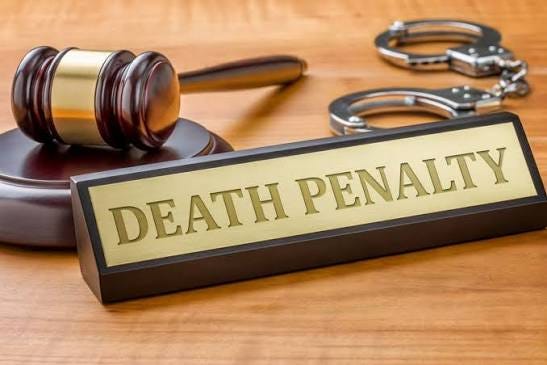
There isn’t a week that goes by when I think that the abolition of capital punishment here in the UK wasn’t a triumph of civilisation BUT a very costly mistake that’s been haunting us for half a century. Even they way in which they removed it was counterfeit.
First, the history. The death penalty in the UK was effectively ended in stages. Gradualism. The British people were never given a vote and for a damned good reason – we would have voted to have kept it. The last executions took place in 1964. Gwynne Evans and Peter Allen were convicted of the murder of John West during a bungled robbery in Cumbria in April of that year. West was beaten and stabbed to death at his home, and the case became the final execution in the UK
Parliament suspended capital punishment for murder in 1965, and it was later abolished for all crimes in 1998, with the UK also binding itself to international human-rights commitments against reinstatement. That was the Blair Government doing what it does.
And what did we get in return for all this pious hand wringing? A justice system that often feels more concerned with protecting killers than their victims. Let’s be blunt about it. There are some crimes that are so evil that the only fitting response is death. The premeditated slaughter of children is one, so are terrorist massacres, these aren’t “mistakes” or products of a difficult upbringing that a few decades behind bars can fix. They are acts that forfeit the right to go on living at our expense.
We were told that in exchange for accepting the ending of Capital Punishment life sentences would mean life. However that too has been chiselled away and now life frequently means 20 or 30 years before possible release. Families are forced to relive the horror every time their loved one’s killer appears for another review. Where is the justice in that?
When the death penalty was suspended, the homicide rate in England and Wales was around 7 per million. It more than doubled in the following decades. Of course, crime is complicated but removing the ultimate deterrent sent a signal: the state is no longer serious about the worst violence. Executing the very worst offenders isn’t barbaric; it’s the only way to draw a permanent line. It is the civilised response.
Of course the British public never really bought into the abolitionist dream. Poll after poll shows around half of Brits – often more when you ask about child killers or terrorists – want the death penalty back for the most heinous cases. That support cuts across class lines and remains stubborn despite decades of elite lectures about “progress.” Ordinary people understand something many in Westminster stubbornly refuse to: justice must feel like justice.
Yes, restoring it would be messy. We’d need new legislation, a proper free vote in Parliament, and the courage to withdraw from those international agreements that treat executing a proven mass murderer as some kind of human rights violation.
We’d also have to rebuild the machinery – rigorous trials, multiple layers of appeal, the works. But sovereign countries can change their laws. Modern forensics, DNA, CCTV, and digital evidence make the risk far smaller than in the days of Derek Bentley or Timothy Evans.
Britain once had the confidence to say that some acts are so monstrous, so deeply evil, that they can only be answered with death. We’ve lost that moral confidence, and our society is the poorer and the more violent for it. It’s time to get it back.
The gallows won’t solve every crime, but for the very worst, nothing else comes close to real justice. We need a Parliament that listens to the people and act.