
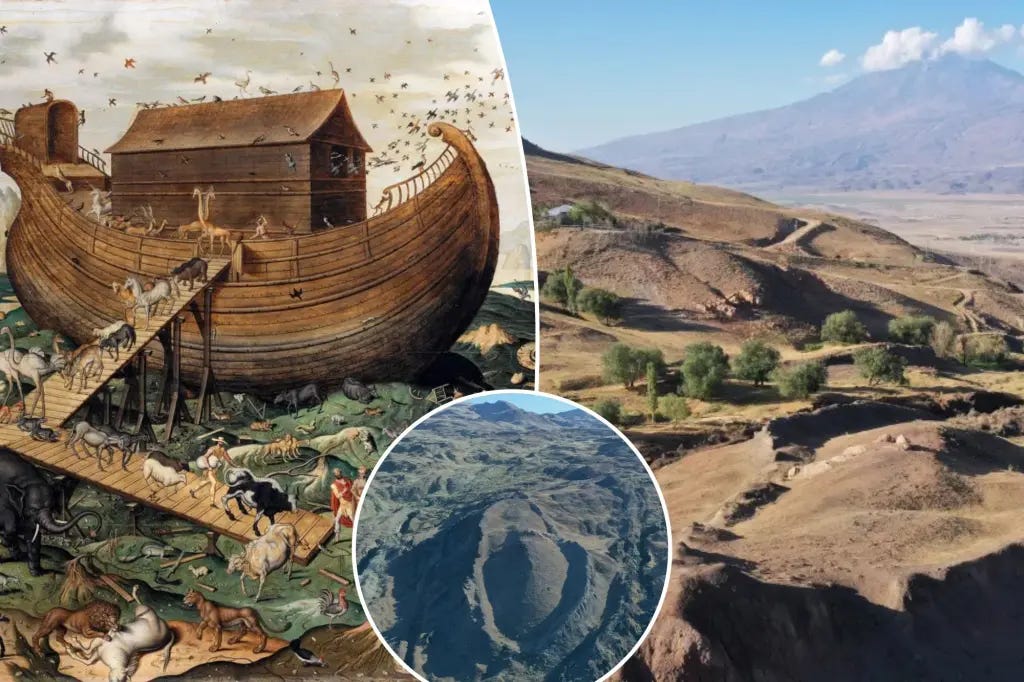
The search for Noah’s Ark.
The David Vance BriefingRead More
It is a story that I am certain everyone reading this article will be very familiar. I can remember being taught it in my Sunday School! In the Bible, the book of Genesis treats the story of Noah’s Ark as actual history. It’s not some sort of fable but rather it is presented as a real thing that happened. Indeed you could say that is is fundamental to the Christian story. Now whether you accept that or not is something we can discuss but the Bible says that it was a real boat, that it was built to God given specific measurements, and that it carried Noah, his family, and pairs of animals through a devastating flood. It was God’s vengeance of a deeply sinful humanity but also a hope of a better future.
And of course, we all know how it ends! When the waters finally receded, the Ark came to rest “on the mountains of Ararat” (Genesis 8:4). This was a clear geographic clue and understandably people have been looking to find it for centuries.
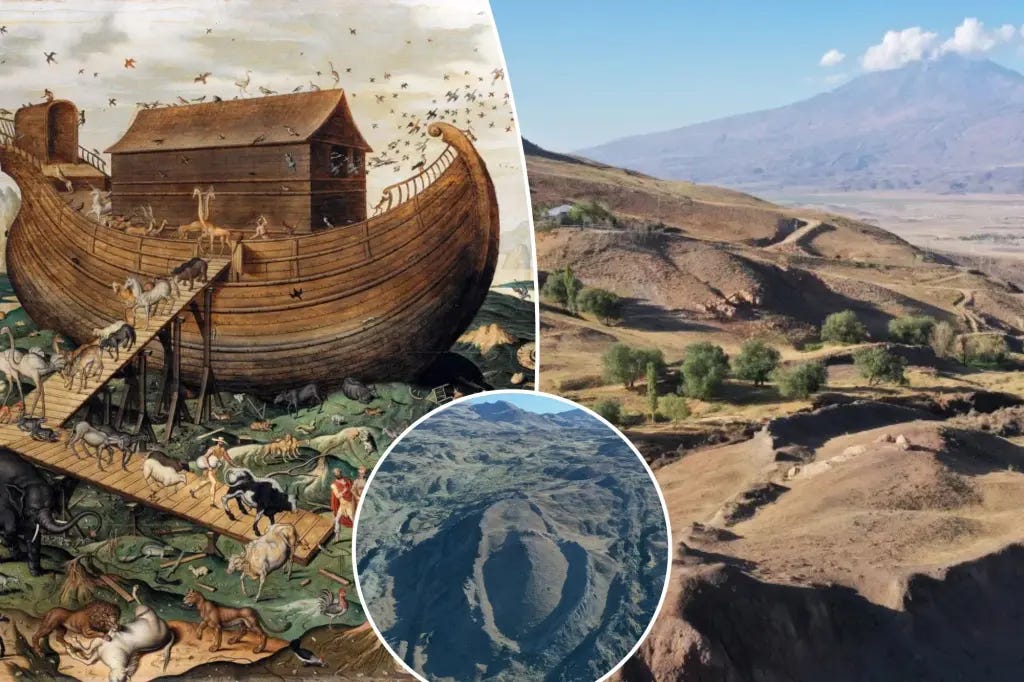
All of this brings me to recent radar work carried out at the Durupınar Formation in eastern Turkey. This has resurrected the old question; could it actually BE the Ark?
The biblical description of the Ark is precise. It was 300 cubits long, 50 wide, and 30 high. Depending on the exact length of a cubit, (and there is some debate abut that). it makes the ship somewhere between 450 and 515 feet—massive for its time. It had rooms, three decks, and was sealed with pitch. The level of details is really quite remarkable but it’s worth me saying from the start that the Bible never promises that pieces of the boat would be found thousands of years later. However. when a formation appears that roughly matches the dimensions given in Genesis and sits in the right region, it’s not unreasonable to try and understand what is going in.
First, Durupınar itself is a boat-shaped mound about 515 feet long, located roughly eighteen miles south of Mount Ararat. It was first exposed in 1948 after heavy rain and earthquakes washed away the surrounding mud. So for many centuries, the “shape” was simply buried. In more recent time, some explorers have claimed that it the fabled Ark.
Now you have to take this all with a pinch of salt and an open mind but the current group investigating the anomaly working under the name Noah’s Ark Scans, has been running ground-penetrating radar using equipment refined from military research. This is where modern tech meets ancient lore. They claim to have detected layered structures, right-angle features about twenty feet down, and what look like corridors. They took soil tests and these have shown higher potassium levels inside the outline than outside it. They suggest this could come from long-decayed organic material. Infrared scans, they say, also hint at a hull-shaped form beneath the surface! Could this be true?
If we return to Genesis for a moment, the length lines up closely with what is quoted there. The reported “internal spaces “echo the “rooms” mentioned in the text. The location is in the broader Ararat range. If the core samples taken produce clear evidence of worked timber, pitch, or structural joinery that would fit an ancient wooden vessel, that would be significant for anyone who reads Genesis as straightforward history.
However in the spirit of intellectual honesty there are some very big unanswered questions. For example, Radar detects differences in density and can show voids or layers but it cannot by itself prove a man-made wooden ship. Landslides, mudflows, and just ordinary geological processes create all sorts of layered and even angular patterns all the time. Most geologists have long regarded Durupınar as a natural feature that just happens to look like a boat! Perhaps they are right? The higher potassium levels and different vegetation could be the result from mineral variations or drainage without any ancient lumber involved. To be fair to the research team itself, it calls these results preliminary and aims to carry out core drilling precisely because radar alone is not enough.
The latest update is that the Durupınar team says a detailed technical report is on the way and that targeted drilling will then follow. It’s exciting to think what will be revealed, if indeed anything! Independent examination of whatever samples they recover will be crucial but until then the formation remains an eye-catching geological oddity that continues to raise questions. .
It’s also worth remembering that the Bible does not need the Ark to be found. The reliability of Genesis does not depend on a wooden hull surviving more than four thousand years of weather, earthquakes, and time. The vast majority of ancient wooden structures have disappeared completely. Finding the remains would be striking corroboration; not finding them would not disprove the account. I also think it very unlikely.
One of the things about the Noah’s Ark account is that these sort of flood stories appear across many ancient cultures, including the Epic of Gilgamesh. There are many similarities between them and taken together they suggest that SOMETHING did happen! However the biblical version carries a distinct moral and theological weight. There are, of course, some major disputes. Mainstream geology works from a very different timeline to Genesis and rejects entirely the idea of a catastrophic global flood of the scale described in Bible.
At the end of the day, the mountains of Ararat retain their secrets. Whether Durupınar eventually proves to be the landing place of Noah’s Ark or simply a remarkable natural look-alike, the Genesis narrative still stands on its own: a record of judgment, mercy, and covenant that has shaped faith for generations.
As a Christian, I DO believe the account given in Genesis but it would be fascinating if it turns out the remains of the Ark were somehow still there!
God works in mysterious ways!
STOP!
Please take a moment to support my work
I publish regular political analysis, overlooked history, book reviews and original commentary that you won’t find in the mainstream media.
Free subscribers receive every article I publish.
Paid subscribers receive everything above, plus The Saturday Briefing — my exclusive weekly analysis launching this September. Each edition will pull together the week’s most important political developments, highlight stories the mainstream media has ignored, and explain what they really mean.
If you value independent journalism and want to help support my work, I’d be delighted to have you on board