
Karl Marx and the Satanic Roots of Communism
The David Vance BriefingRead More
What if I told you that Marxism has deep roots in Satanism? Would you be surprised? Is it possible that an ideology which has captured the minds of millions of people around the world has an origin story rooted in deep evil?
I recently read Richard Wurmbrand’s fascinating book, Karl Marx and the Satanic Roots of Communism. It isn’t an easy read and nor was it intended to be. Wurmbrand wrote it after spending fourteen years in Romanian Communist prisons. Unlike many modern academics who analyse Communism from their ivory towers, Wurmbrand experienced it at its most brutal – in a prison cell.
One of the first things Wurmbrand talks about is something that may surprise many people. Karl Marx did not begin life as an atheist. He was raised in a Christian home and his early school essays reveal someone who understood Christian teaching well. He explicitly wrote about finding comfort in Christ, about serving others selflessly, and about the believer’s relationship with God.
Then, according to Wurmbrand, everything changed.
Marx’s later poems strike an entirely different note. They are filled with a bitterness, a darkness and open defiance of God. In one, Marx declares,
“I wish to avenge myself against the One who rules above.”
In another, he describes a soul once devoted to God but now “chosen for hell.”
Whose soul was that, I wonder?
Wurmbrand argues that these are not isolated literary flourishes but rather clear evidence of a profound spiritual rebellion. Marx no longer appeared merely indifferent to Christianity; he was openly hostile towards it.
Marx also wrote a student play entitled Oulanem.
Wurmbrand points out that the title is an anagram of Emmanuel, one of the Bible’s names for Jesus, written backwards. In occult traditions, reversing sacred names carries symbolic significance. Marx was only nineteen at this point.
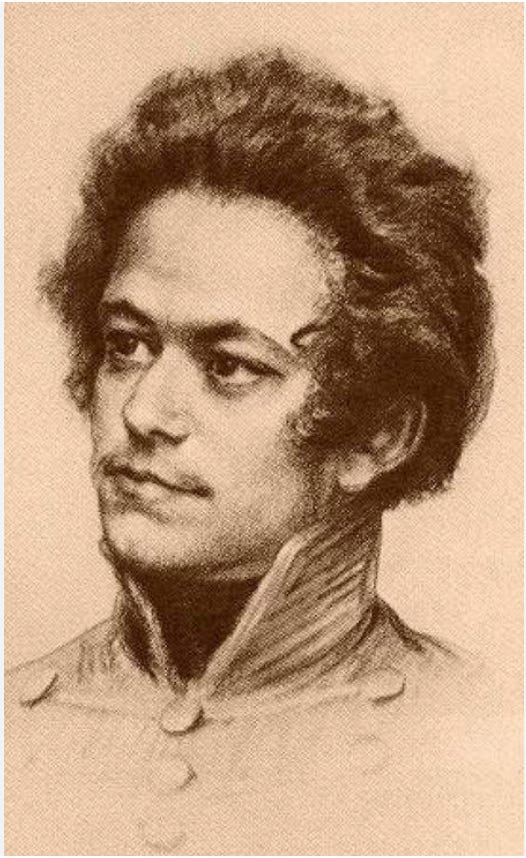
The play itself is bleak. Its central figure longs to drag humanity into destruction before following them into the abyss himself. Elsewhere, Marx wrote of receiving a sword from “the prince of darkness.” Wurmbrand stops short of suggesting Marx literally entered into some formal pact with Satan but something had changed. Instead, he argues that the recurring imagery, together with Marx’s increasingly hostile language towards God, reveals a deliberate rejection of Christianity.
Of course Marx wasn’t the only one expressing these ideas. Wurmbrand notes that several of his closest associates embraced similarly provocative themes. Mikhail Bakunin praised Satan as history’s first rebel and champion of freedom. Pierre-Joseph Proudhon described God in deeply contemptuous terms, while Marx himself repeatedly expressed hatred for all religion.
Interestingly, Wurmbrand contrasts Marx’s public concern for the working classes with remarks in his private correspondence that often appeared dismissive or contemptuous. Added to this was a deeply troubled personal life marked by financial chaos and family tragedy. Two of his daughters committed suicide, as did a son-in-law. Not exactly a happy family.
From there, the book moves beyond Marx himself to examine Communism as a whole.
Wurmbrand argues that Communist ideology functioned as a substitute religion.
It possessed its own sacred texts, unquestionable authorities, rituals and demands for absolute loyalty. To many believers it became more than just a political movement; it became a faith that demanded absolute obedience. It’s hard not to see the almost messianic zeal that typifies some converts to Communism even these days
At the same time, it sought relentlessly to eradicate genuine religious belief. Churches were closed, converted into museums, even destroyed. Clergy and ordinary believers faced imprisonment, persecution and execution. In some Communist states, children were encouraged to ridicule Christianity or reject it entirely. Wurmbrand cites a Soviet publication that admitted the ultimate objective was not simply opposition to organised religion but opposition to God Himself.
I think that is the key point to understand about both Marx and Communism.
Wurmbrand writes as a Christian pastor who watched his friends suffer and die, and who endured years of imprisonment because of his own faith. His purpose is clear; to persuade Christians that Marxism cannot be separated from its deeper spiritual foundations. If its origins lie in rebellion against God, he argues, then hostility towards Christianity is not an unfortunate side effect but an inevitable consequence. In fact, Wurmbrand argues;
hostility towards Christianity is not a by-product of Communism. It is one of its defining features.
The questions that Wurmbrand raises are not easily ignored. Why did so many Communist governments devote such extraordinary effort to suppressing Christianity? Why did opposition to God become such a recurring feature of regimes that claimed to be concerned only with economics and social justice?
Wurmbrand closes by presenting us with a stark choice. One road leads away from God, towards the destruction symbolised in Marx’s own writings. The other leads towards Christ. His final message is very straightforward: ideas matter. They shape our societies, influence governments and they impact on our individual lives. Understanding where those ideas come from, he believes, is essential if we are to understand where they may ultimately lead.
These days, Karl Marx is often presented as little more than an economist or political philosopher whose ideas were later abused by dictators. Wurmbrand completely rejects that interpretation. He argues that Marx’s hostility towards Christianity wasn’t incidental—it was foundational.
There is one historical fact that is difficult to ignore.
Wherever Communism gained absolute power, Christianity became an enemy to be suppressed. Churches were closed. Clergy imprisoned. Believers persecuted.
For me, that raises an uncomfortable question. If Communism consistently wages war against Christianity, can the two ever truly coexist? History suggests that you can embrace Communism, or you can embrace Christianity—but ultimately, you cannot embrace both.
If this article made you think, you’ll probably enjoy my other work.
I publish original political analysis, overlooked history and book reviews that challenge the mainstream narrative.
Free subscribers receive my regular articles.
Paid members also receive The Saturday Briefing—my exclusive weekly analysis launching this September.
Join thousands of independent-minded readers by subscribing today.