Is Britain beyond Reform?
The David Vance BriefingRead More
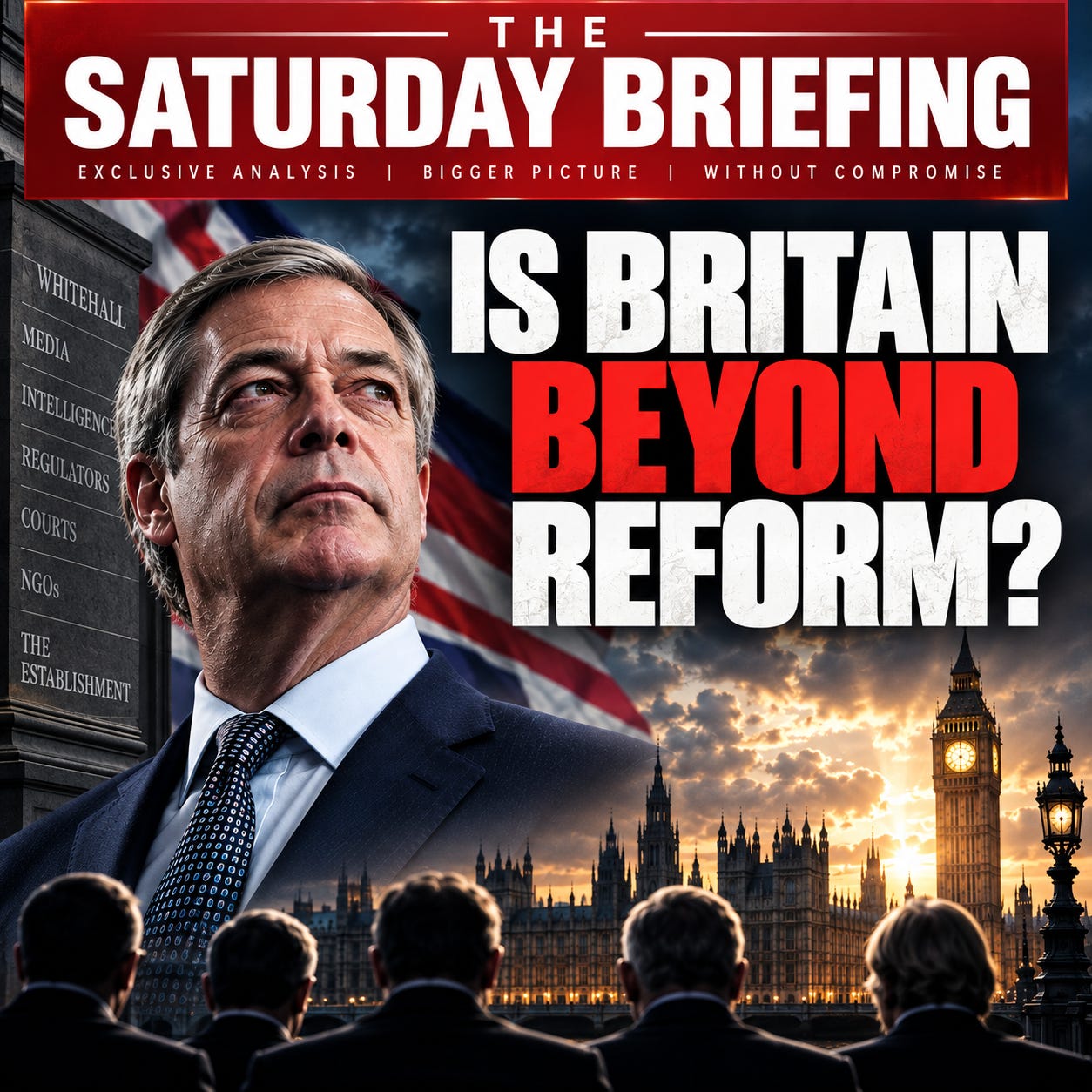
The Red/Blue UK political establishment survived Brexit. Do you think it will it casually allow Nigel Farage and Reform to cruise into Downing Street in 2029? In this Saturday Briefing I want to deal with a question that is hanging over British politics;
Is the British establishment out to utterly destroy Reform UK?
Having studied the events that engulfed the Reform Annual Party Conference last weekend, several big questions came to mind and I want to try and answer them!
To start with, let me tell you what isn’t happening. I don’t think that somewhere beneath Whitehall there is a smoke-filled bunker in which sinister men gather every Tuesday afternoon and discuss how to destroy Nigel Farage.
That’s because real political power doesn’t usually work like that. It is much more deep rooted, more insidious. Institutions have their interests. and bureaucracies have their cultures. Establishments also have their agenda. Politicians, civil servants, broadcasters, regulators, academics and campaign organisations don’t need to receive written instructions from some mysterious central committee to broadly move in the same direction. It is organic and totally wired into the British political establishment.
The problem here is that Reform presents all of them with a problem. You see Reform isn’t just another political party. It threatens the system itself. I know that Reform is imperfect and I have questions about the Farage style of leadership but the May 7th election results showed us that Reform really is the disruptor party. It IS the Challenger and it has connected with millions of British voters.
I really don’t think you can deny that.
It’s also crucial we get the context right.
For many decades, Britain has been governed by what I call the Red-Blue Uniparty and this has worked very well for those wanting power and influence.
The Conservatives tend to win power but eventually people get sick of them and then it’s Labours turn. The faces may change but a lot of the rhetoric stays the same. If you consider the big issues of our time; mass immigration, the growth of the State, Net Zero, international institutions, human-rights law and the power of Whitehall — the direction of travel has often remained remarkably consistent.
Brexit came along in 2016 and things changed. The establishment did not like that, it was a genuine shock and it ultimately led to Reform, via the Brexit Party.
CUMMINGS’ WARNING
Dominic Cummings was considered to be the brains behind Boris Johnson. He also played a crucial role in the Vote Leave campaign. He subsequently operated at the very centre of Downing Street as Boris Johnson’s chief adviser. Few would deny that Cummings knows Whitehall. And earlier this year he made a disturbing predication
He warned that there would be an “all-out attempt to decapitate Farage.” In fact he went much further than just alleging ordinary political dirty tricks.
He suggested that elements within the system could target Reform donors, use financial investigations against them and even use intelligence capabilities and leaks against Farage himself. It seems credible that Cummings understands the mentality of Whitehall better than most of us and so we should reflect on his words
Cummings has actually been inside the machine and he knows how it works. And he says the machine regards movements threatening the existing political settlement very differently from ordinary opposition parties.
WHY REFORM IS DIFFERENT
If you have ever watched “Yes Minister”, that classic political satire, you will understand that the establishment knows how to deal with any Red/Blue governments.
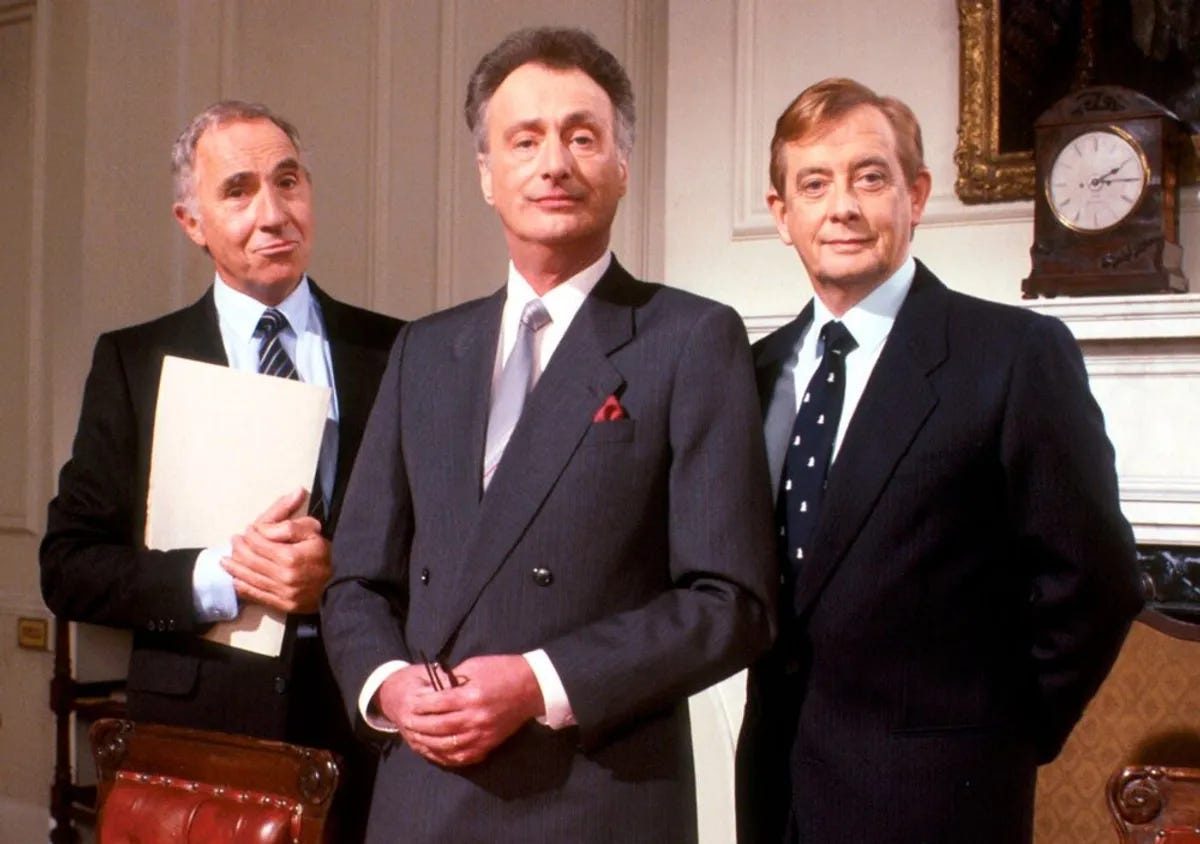
It has been doing it for generations and is very polished at it
Let’s imagine a Conservative minister arriving promising radical reform. The civil servants explain why it is so terribly complicated. The Government lawyers explain why it might be unlawful. The Treasury explains why it is definitely unaffordable.
The media, led by the State Broadcaster the BBC, will explain why it is very controversial to change, anything. The legions of NGOs explain why it is dangerous.
After a few years, there is agreement to establish a review.
Then Labour gets elected!!!! And it all starts again. It’s an infinity loop.
This is what I have known all my life and even the more radical Thatcher Government found itself caught up in this merry go round, Little fundamentally changes although she did better than most.
But this is how the system is designed to operate and for generations this has worked very well for the political establishment if not for the British people.
However, Reform potentially represents something different. It has a raft of policies which whilst not as radical as I would ideally like to see, are still of different level to anything we have seen.
Reform insist that it will stop the cross channel illegal migration and central to achieving that is leaving the ECHR. It also insists it will deport millions of illegal migrants, dismantle Net Zero, slash Whitehall bureaucracy, and challenge the BBC.
Whatever you think of those policies, imagine how they appear from inside the institutions that would be affected by them.
Reform isn’t proposing merely to change the people running the machine.
It is threatening parts of the machine itself. That gives the machine a very obbvious and urgent interest in Reform’s failure.
THEN LOOK AT WHAT KEEPS HAPPENING
Nigel Farage seems to understand exactly what is actually going on. Ever since the May 7th elections, just look at the sheer volume of controversy surrounding Reform! The cacophony of noise is off the scale. We have seen the financial investigations into Farage and Tice, and these are ongoing. We have seen Farage resign his seat and then win it again. It is a constant drip drip drip with the obvious aim of wearing Farage down. It seems to me that this is working, have a watch of this by way of evidence,
It is remarkable to see the sheer range of controversies that have swirled around Reform. Its donations and donors have been picked apart, its candidates subjected to intense scrutiny, and the personal histories of those associated with the party repeatedly dragged into the spotlight. We have seen secret recordings, undercover operations and carefully timed media exposés, alongside an almost continuous stream of allegations involving extremism, racism, foreign influence and, inevitably, Muh Russia.
Last week, immediately before Reform’s annual conference, another undercover investigation exploded across the media. Two senior Reform figures close to Frage stepped aside, Bizarrely, Farage called them “contractors” which shows a ruthlessness that is not particularly appealing but I suppose he had little choice,
Labour have called for police involvement, the Electoral Commission is examining the allegations, and Farage responds by claiming that his party has been deliberately entrapped.
None of this means Reform should somehow be above scrutiny. Quite the opposite. If it seriously aspires to govern Britain, its finances, candidates and senior officials should withstand proper examination. Some of the controversies surrounding the party may be entirely self-inflicted. Some of its representatives may have behaved foolishly, exercised poor judgement or simply handed ammunition to their opponents. Being anti-establishment does not confer immunity from investigation, nor should it.
But acknowledging all of that still leaves a legitimate and increasingly difficult question.
Is Reform simply receiving the normal scrutiny that accompanies political success — or are we witnessing opposition research being conducted against it on an industrial scale?