
In the shadow of the Gunman…
The David Vance BriefingRead More
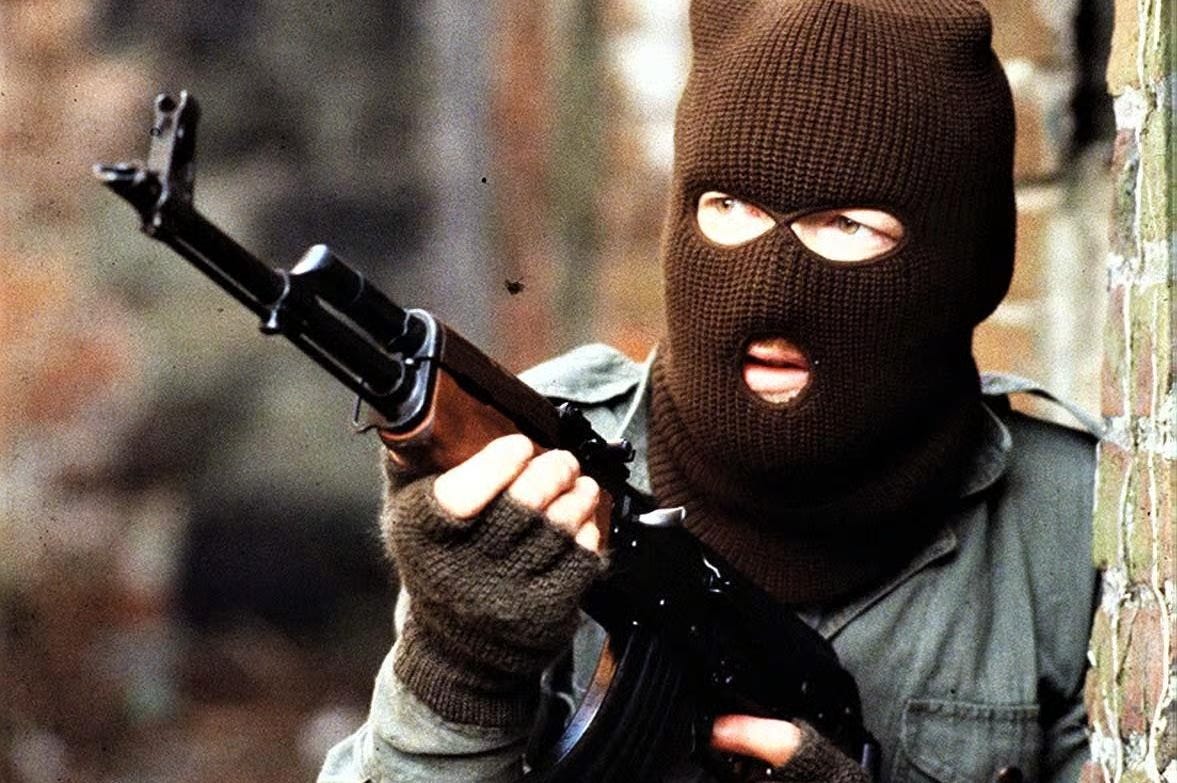
It doesn’t really surprise me but it most certainly does disgust me. I’m talking about the revelations that came out in the High Court hearing in Belfast today into the Drumcree Parade along the Garvaghy Road.
In summary, the Police assessments presented to the court cited risks from dissident republicans potentially armed with firearms and petrol bombs, alongside a stated need to remain “mindful” of Provisional IRA feelings. Got that? They wanted to make sure that they didn’t hurt the feelings of the IRA. That’s the same IRA that murdered 300 Police officers!
How rotten is the morality behind that? It was this deeply immoral analysis that led the Northern Ireland Secretary of State Chris Bryant to ban the traditional Orange Order procession. The law-abiding were essentially sacrificed to appease the lawless.
The intelligence picture presented to the court was most disturbing for the sheer depth of its imbalance. Mainstream Irish republicans, the assessments indicated, were struggling to restrain hardline dissident Republicans intent on confrontation. Yet the Police response was not to reinforce the rule of law or to ensure the lawful parade could proceed under protection. Oh No. Instead, the Police appear to have treated the prospect of Irish republican opposition—including from remnants of an organisation once responsible for the bulk of Troubles-era violence—as a decisive constraint.
Being “mindful” of PIRA feelings is such a perverse formulation that it would have been unthinkable if applied in reverse to loyalist paramilitary sentiment. This proves an institutional culture in which the historical grievances and residual influence of one side are given greater operational weight than the statutory rights of the other. In short, that is what the “peace process” was all about – APPEASEMENT.
This was not just one bad judgment call. The route had been blocked by unlawful protests, and the Police advice to the Secretary of State followed that obstruction. In effect, sustained opposition was allowed to convert a long-standing parade into a security problem whose only practical solution was prohibition.
The utterly useless DUP leader Gavin Robinson criticised the handling of the situation precisely because it rewards disruption and places the burden of de-escalation on those seeking to exercise a traditional right rather than on those threatening violence. But beyond that criticism, no action.
Sinn Féin leaders, by contrast, framed the protests as necessary to “protect the peace” But that’s the very peace their associates planned to break!!!
The imbalance here is stark: one side’s determination to stop the parade is treated as a legitimate expression of community concern; the other side’s determination to walk it is treated as a potential trigger for disorder that the state will not confront.
Seems to me that this ongoing judicial review tests more than just a single ministerial decision. It asks whether the Police operational assessments and the advice derived from them meet the standards of impartiality expected of a modern police service.
I think the answer is obvious. They do not.
The current shape of Policing in Northern Ireland was redesigned after the Patten reforms. I vocally opposed Patten at the time. Yet these episodes such as Drumcree continue to support the view that institutional caution—shaped by decades of republican paramilitary capacity and the political leverage that capacity once conferred—still shapes threat assessments.
When security intelligence points to dissidents with access to firearms and petrol bombs, the proper response should be to face them down and ensure that the lawful parade can proceed. Instead we see a shameful accommodation that effectively cedes the streets to those prepared to use the most violence or the threat of it.
Now the usual apologists for the decision to ban the lawful parade will moan and claim that the Garvaghy Road parade operates under intense political and community pressure, and that any miscalculation has historically carried heavy costs. This is then used to license the double standard,
If the Police’s own assessments identify a threat from dissident Irish republicans that mainstream Sinn Féin structures cannot fully control, the public interest lies in confronting that threat rather than allowing it to dictate the boundaries of lawful parading. It’s so perverse and yet that is exactly how things stand.
The Unionist community sees a pattern in which its cultural expressions are managed downwards whenever republican opposition hardens. Until the Police can demonstrate that it will protect a parade from firearms and petrol bombs with the same determination it applies to other public-order challenges, that perception will persist. It’s another example of Two Tier policing.