
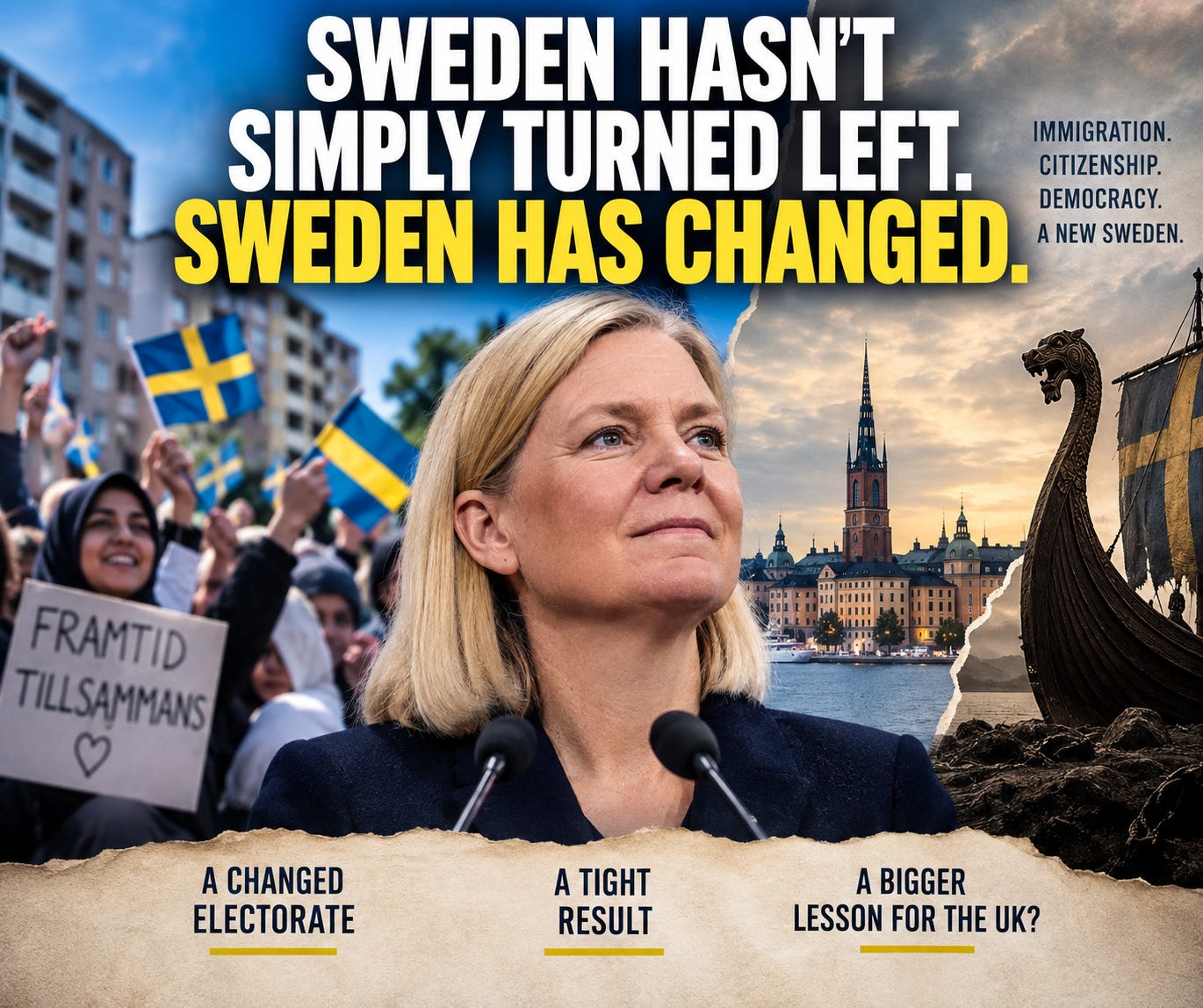
From Abba to Allahu Akbar!
The David Vance BriefingRead More
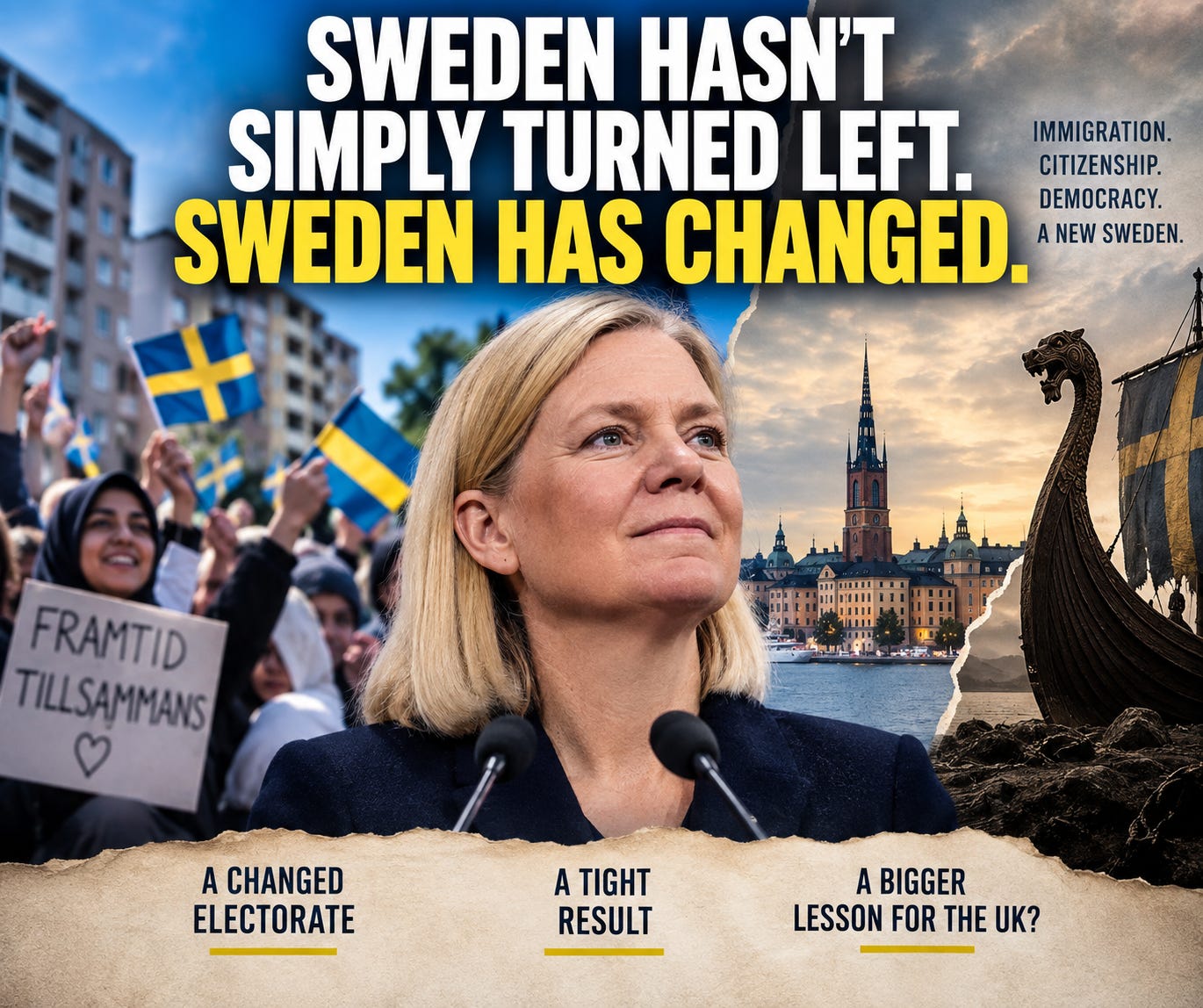
Well, the Swedish voters have had their say in their Riksdag (general) election and whilst it looks close, I think we can conclude that the LEFT has won a narrow victory. I think there are some big lessons in this for us here in the UK and so come with me to visit the land of Vikings and Abba as we try to properly understand what has happened!
I should start off by saying that I have been to Sweden several times and I loved it. I can even remember having breakfast in a very nice hotel in Stockholm and Stephen Hawking was seated at the next table! I like the Viking past, I’m a big fan of Abba, but Mamma Mia, this Election result is not good news.
Now you could simply say that Sweden has voted Left. That is the easy interpretation of an extraordinarily tight election that appears to have put Magdalena Andersson and her Social Democrats in a position to return to power.
But Sweden hasn’t simply moved Left. Sweden itself has changed.
The brutal truth here is that substantial immigration has changed Swedish society and, over time, the electorate. Foreign nationals cannot vote in Riksdag elections; only Swedish citizens can. But the problem is that many immigrants have now become citizens, acquiring the right to vote.
More than one in six eligible voters in this 2026 parliamentary election was born outside Sweden.
If you delve into the exit polls, we see a few gems. Voters of non-European background supported the Left in huge numbers!
Around 38% voted Social Democrat and 21% for the Left Party. Including the Greens and Centre Party, that’s roughly 70% backing Andersson’s bloc, compared with a mere 27% for the Right.
Here’s a startling fact;
In immigrant-heavy Rinkeby, Reuters have reported that the centre-left won 94% of the vote. 94%!
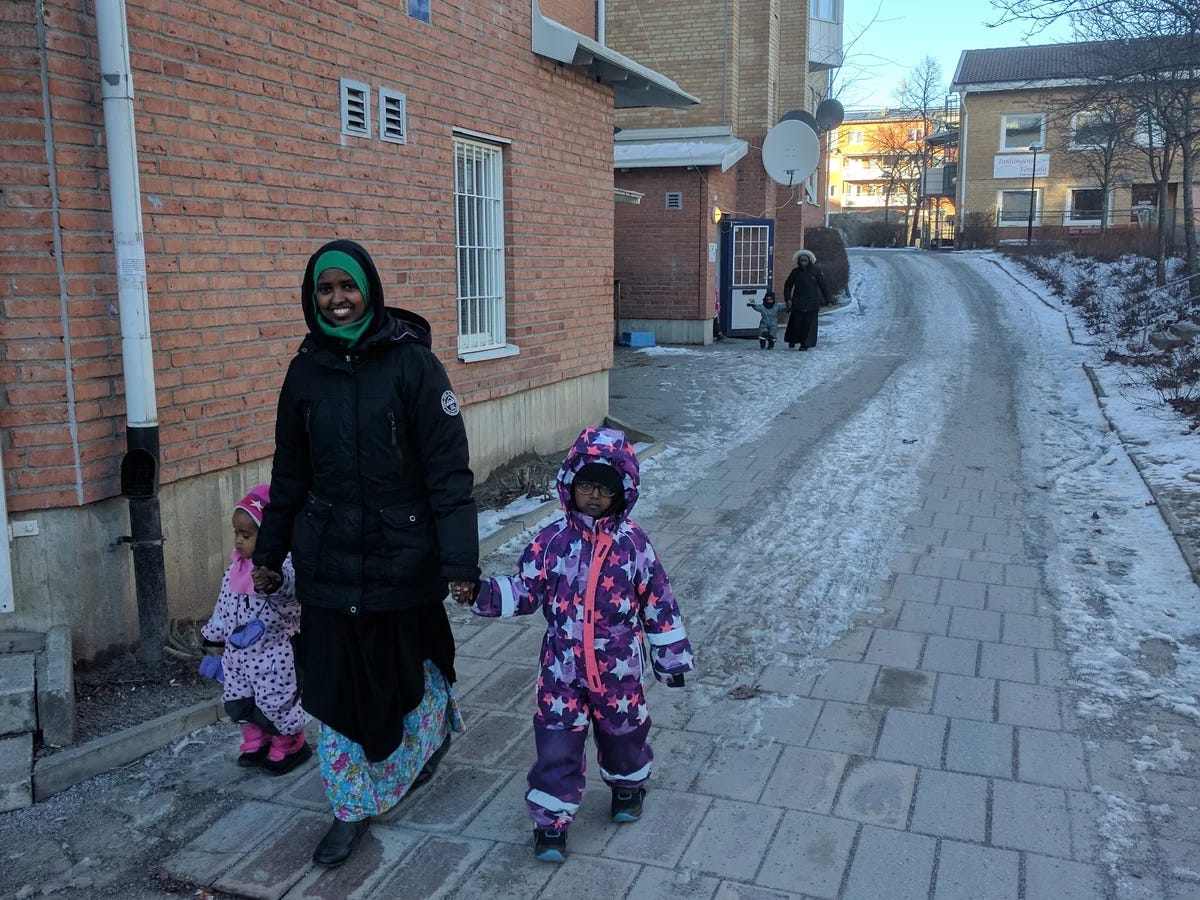
On election day itself, Andersson campaigned extensively in Stockholm’s immigrant-heavy districts, including Rinkeby. Reporting from Rinkeby found voters specifically citing deportation policy as a reason for switching to the Social Democrat.
That really matters in a tight election divided by just three projected seats: 176 for Andersson’s LEFT bloc and 173 for the Right.
Demographic change has very real political consequences, especially when a large and growing section of the electorate votes so differently from the national average. This is where demographic turns into political power — and why pretending immigration has no long-term electoral consequences is absurd.
The Sweden Democrats warned for years that mass immigration was changing Sweden. They were right about the transformation, though its consequences were not limited to culture, economics or public services. Once immigrants become citizens, demographic change becomes electoral change.
And Sweden starts to become un-Swedish.
There is also an irony here. The left wing Social Democrats have moved significantly to the Right on immigration, adopting seemingly tougher controls and integration policies. The Sweden Democrats won much of that policy argument, but voters can still support the Social Democrats because of healthcare, welfare, education or living costs. This has been picked up by the Daily Telegraph and repackaged as hope for Kemi and the Tories.
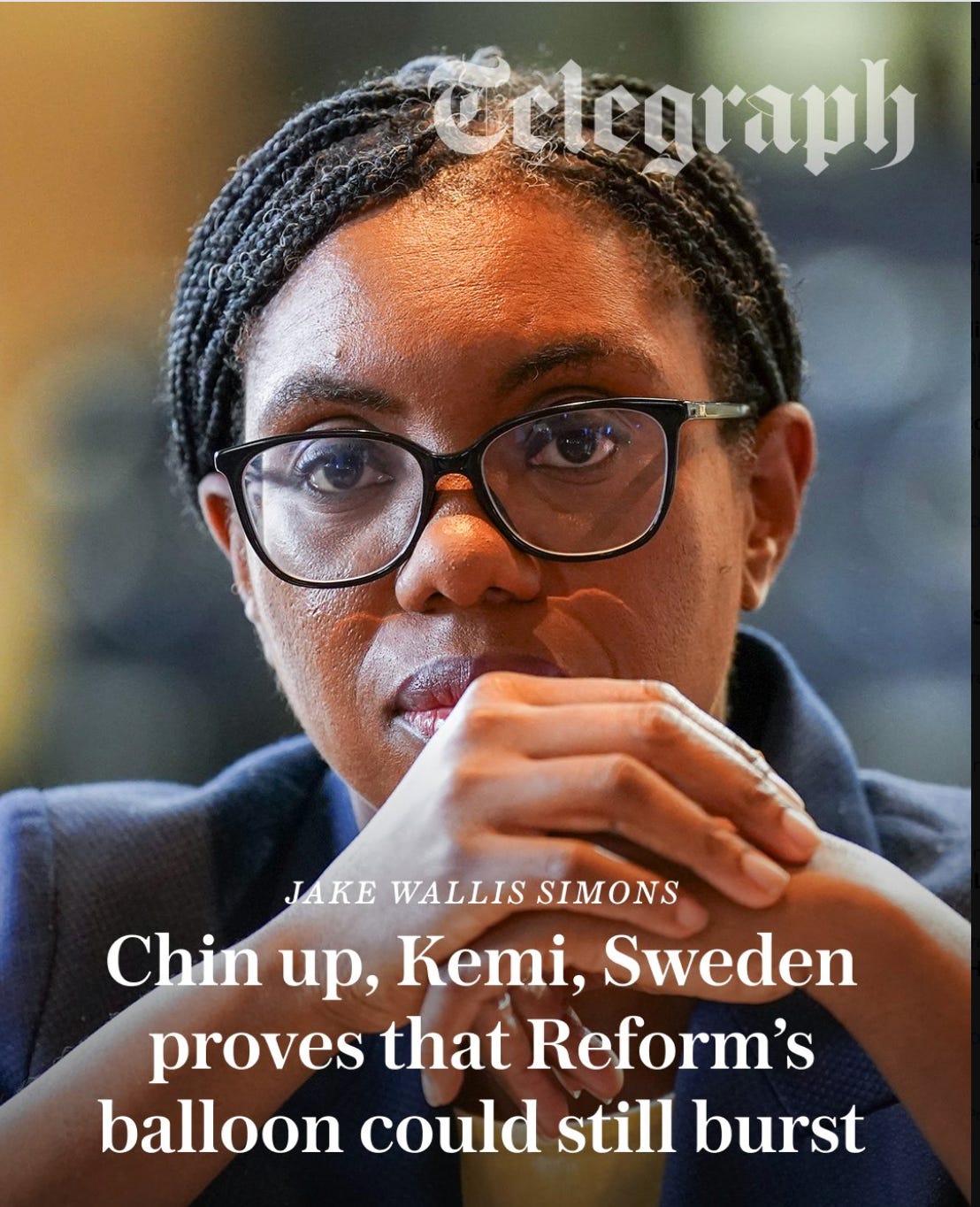
Meanwhile, the electorate has changed in ways that may disadvantage the party most associated with opposing immigration. It is the predictable political consequence of large-scale immigration followed by naturalisation.
The lesson is not simply that Sweden has swung Left. It hasn’t. But something much more profound has happened. Sweden spent decades changing its population. Through naturalisation and citizenship, that changed population is now changing the country’s electoral arithmetic as well.
There is a bitter irony in that. Sweden’s extraordinarily liberal immigration policies may now help determine whether a government elected to reverse those policies can remain in office long enough to do so.
The Vikings have gone. Sweden may follow.
Enjoyed this? Then don’t just read it — join me.
I publish The David Vance Briefing every morning: independent analysis of the stories, arguments and political battles I believe matter — without the filters of the mainstream media.
Subscribe free and every new Briefing comes straight to you.
And if you value what I do and want to support genuinely independent commentary, become a paid subscriber. You’ll also receive my exclusive Saturday Briefing, where I go much deeper into one of the week’s biggest issues.
Your support keeps this independent.!