No criticism of Islam allowed in non Islamic Countries?
David Vance SubstackRead More
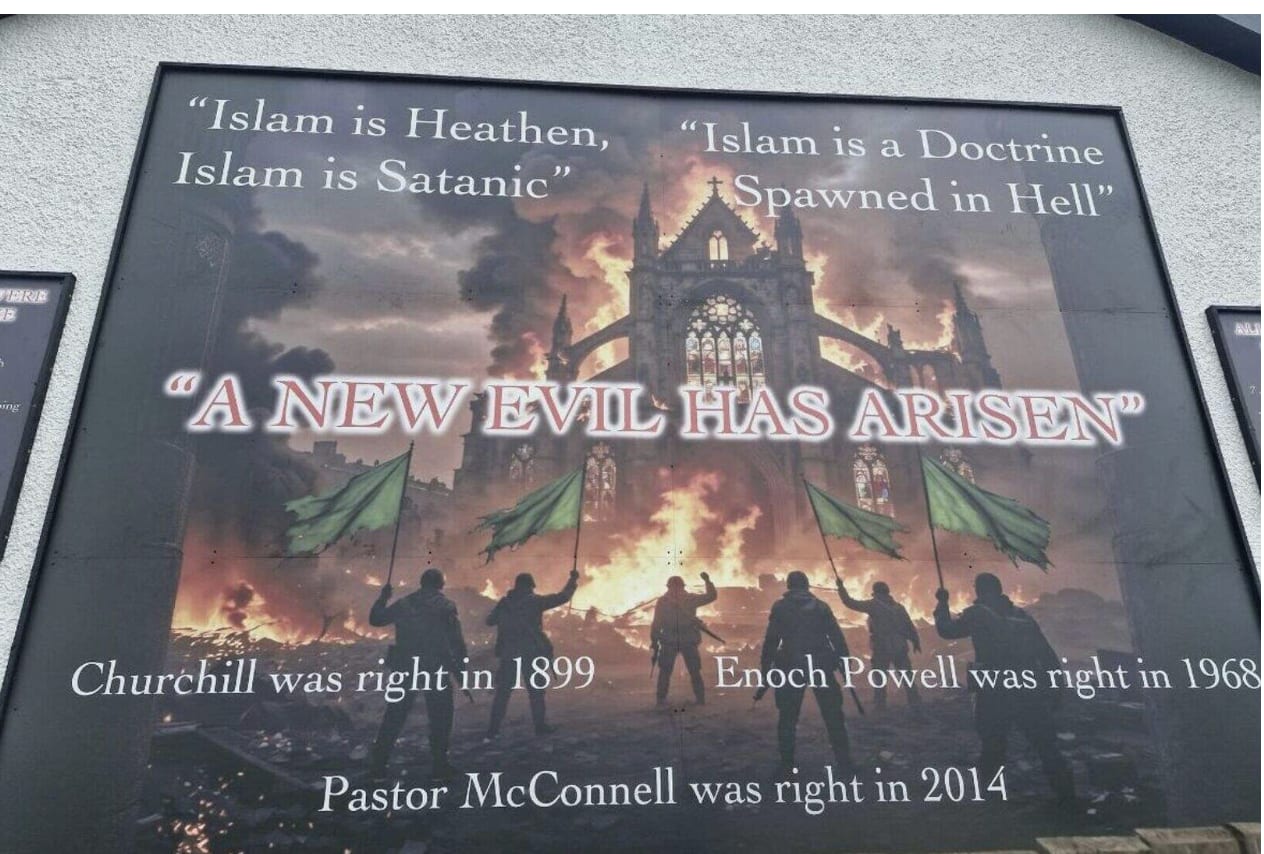
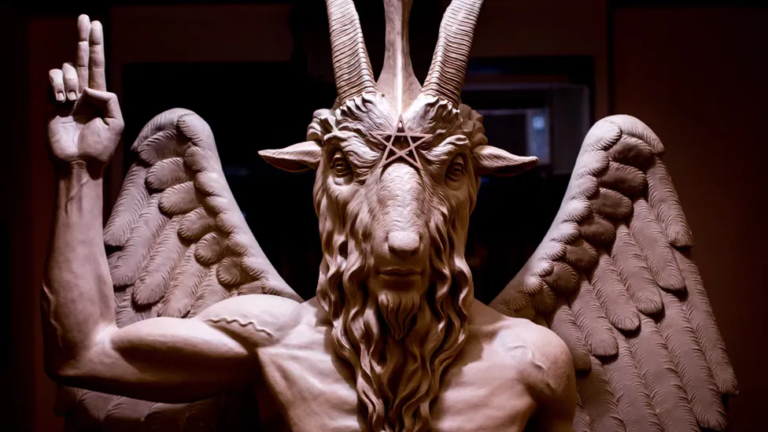
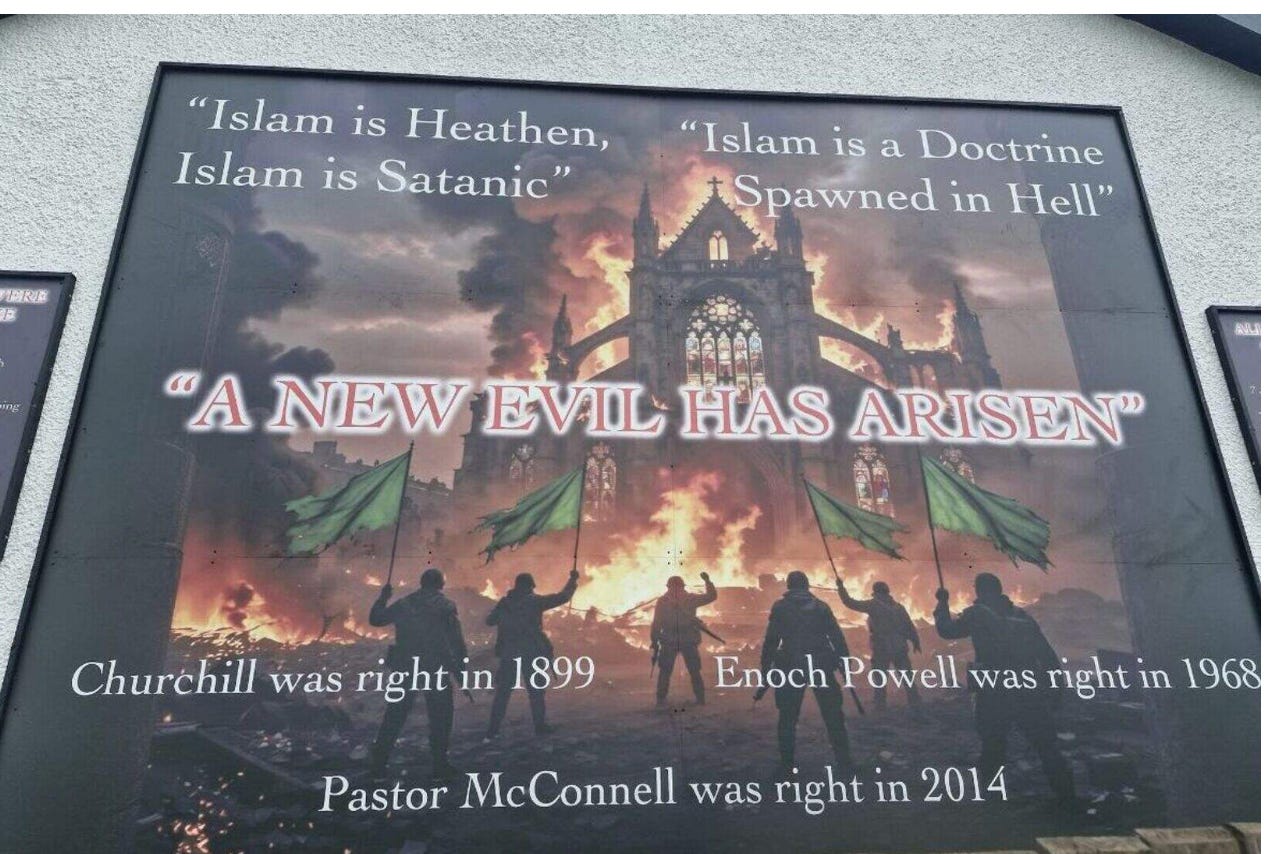
A few days ago, residents of a place in Northern Ireland called Newtownabbey woke up to a brand new mural on a gable wall. Painted by a group calling itself “Concerned Parents of Newtownabbey,” it declared in uncompromising terms that Islam is a “heathen” and “satanic” doctrine “spawned in Hell,” alongside references to Churchill, Enoch Powell and local Pastor James McConnell.
The imagery of the mural was stark, including what looked like a burning church. Police treated it as a hate incident. Two men have been cautioned, and the mural has now been removed, even though the investigation continues.
Here’s the thing though: the message didn’t single out any individual Muslim. It didn’t call for violence against people. It simply targeted an ideology. Yet in a town where Muslims make up a tiny fraction of the population – well under 1% – the authorities decided the sensibilities of that small minority outweighed the right of the overwhelming majority to express real concerns about cultural change.
Historical Christian critiques of Islam have long been part of theological debate. From the earliest centuries, Christian writers engaged robustly with Islamic theology. Why should modern day equivalents on public walls now trigger police investigations? This isn’t ancient history; it’s a live question in today’s Northern Ireland.
I would contend that all ideas, especially those with massive social impacts like religion and immigration, must remain open to vigorous challenge. It sits at the core of free speech and we must fully support the right to express it. After all, Islam isn’t merely a private faith for many of its followers; it encompasses political and legal doctrines (e.g., Sharia) that have clashed with western norms on issues such as apostasy, gender roles, free expression, and integration. So these aren’t abstract theological points.
Across Europe, we’ve seen grooming gang scandals, demands for parallel legal systems, and integration failures that successive governments have downplayed or denied. Newtownabbey isn’t some multicultural melting pot. It’s a typical working-class unionist area where local people are watching rapid population shifts elsewhere and wondering what it all means for their children’s future. At a time of rapid demographic change, open debate on culture is essential, not taboo.
Suppressing majority concerns won’t foster cohesion but rather breed resentment. The PSNI’s enthusiasm for “non-crime hate incidents” only deepens the problem. It turns hurt feelings into official records and chills ordinary speech. A crude mural on a gable wall is one thing; treating ideological disagreement as criminal is quite another.
The PSNI and policymakers would do well to prioritise actual crimes over ideological discomfort.