
From Cinema Rex to Iranian School bombings
David Vance SubstackRead More
Let’s start this one back in the summer of 1978.
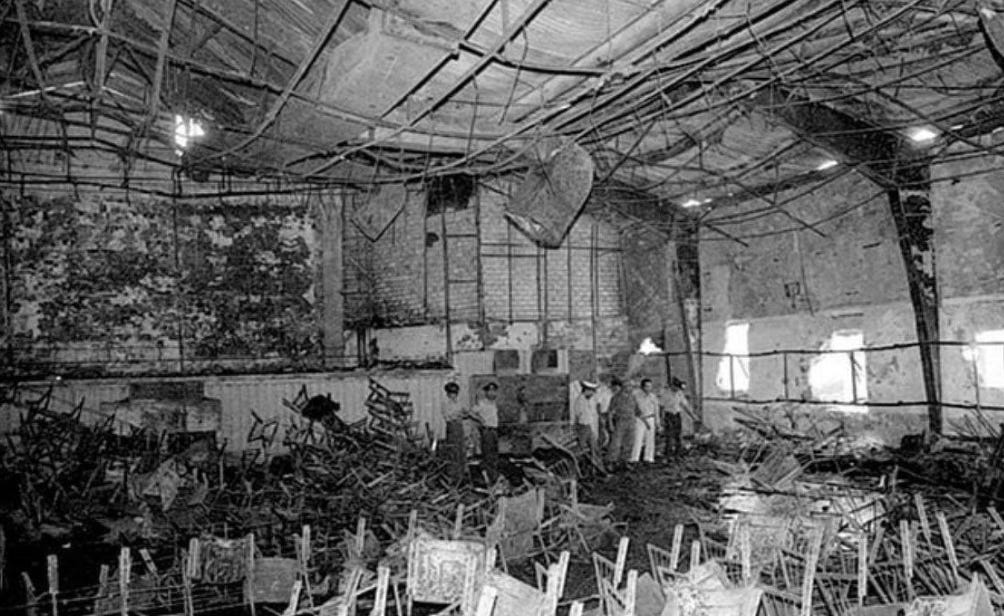
The Cinema Rex theatre in Abadan, Iran, became the site of one of the most horrific acts leading up to the Islamic Revolution. On 19th August, four Islamist militants linked with Ayatollah Khomeini’s followers barricaded the doors, doused the building with gasoline and set it ablaze during a screening.
At least 377 people—some say up to 470—perished, trapped and many burned alive in the inferno. The victims included families, men, women, and children seeking escape from the heat in an air-conditioned theatre. It was a total horror.
The perpetrators, radical Islamists opposed to the Shah’s regime and Western-influenced culture, quickly launched a disinformation campaign. They spread rumours blaming SAVAK, the Shah’s secret police, for orchestrating the attack to discredit the opposition.
Despite later evidence—including confessions from involved militants and post-revolution admissions pointing to Islamist responsibility—the lie took hold. In truth, a lie gets round the world before the truth gets its boots on.
Naturally public outrage surged, with massive protests chanting against the Shah. The tragedy fueled anti-government sentiment and became a pivotal catalyst for the 1979 Islamic Revolution.
That toppled the monarchy and installed the Mullah regime.
Fast-forward to late February 2026.
Amid escalating U.S.-Israeli military strikes on Iran, a precision missile attack devastated a girls’ elementary school in Minab on February 28th, the opening day of intensified operations.
Now reports indicate that the strike occurred during school hours, killing between 150 and 180 people, predominantly young girls aged 7 to 12, with many more injured. The building was heavily damaged, and heartbreaking scenes emerged of parents searching rubble for their children. This was another horror.
Iranian authorities immediately attributed the strike to U.S. and Israeli forces, framing it as a deliberate assault on civilians and a violation of international humanitarian law. United Nations experts, UNESCO, and Human Rights Watch condemned the incident, calling for independent investigations and labeling attacks on schools as grave breaches. Liberal journalists then parrot this as if it were a fact.
Evidence from satellite imagery, videos, and analyses suggests the school may have been hit as part of strikes targeting a nearby base linked to the Islamic Revolutionary Guard. U.S. officials have acknowledged an ongoing investigation, with some sources indicating possible American responsibility, though no side has fully claimed the strike.
President Trump has publicly suggested Iran itself might have caused it due to missile inaccuracies, a claim echoing denial tactics. Whether the school strike was intentional collateral damage, a targeting error near a military site, or something else remains disputed amid the fog of war.
Yet the Iranian regime’s response follows a recognisable pattern that mirrors 1978’s strategy precisely. Manufacture or exploit a tragedy. Blame the adversary. Exploit the outrage to consolidate power or justify repression.
In 1978, the disinformation helped revolutionaries seize control. Today, the regime uses this incident to portray itself as a victim defending the nation against foreign aggression, stifling dissent and unifying hardliners.
Genuine horror at child deaths is of course totally warranted—schools must never be battleground. However accepting Tehran’s framing uncritically ignores its long history of propaganda, from staging events to poisoning schoolgirls in 2022-2023 protests to suppress uprisings.
The parallels are there to see: events involving mass civilian casualties are weaponised for political gain. In 1978, the arsonists’ lie ignited revolution. In 2026, the regime deploys similar tactics to try and save itself.
Understanding this history is crucial to seeing through the current manipulation and recognising the regime’s reliance on tragedy as a tool of control.