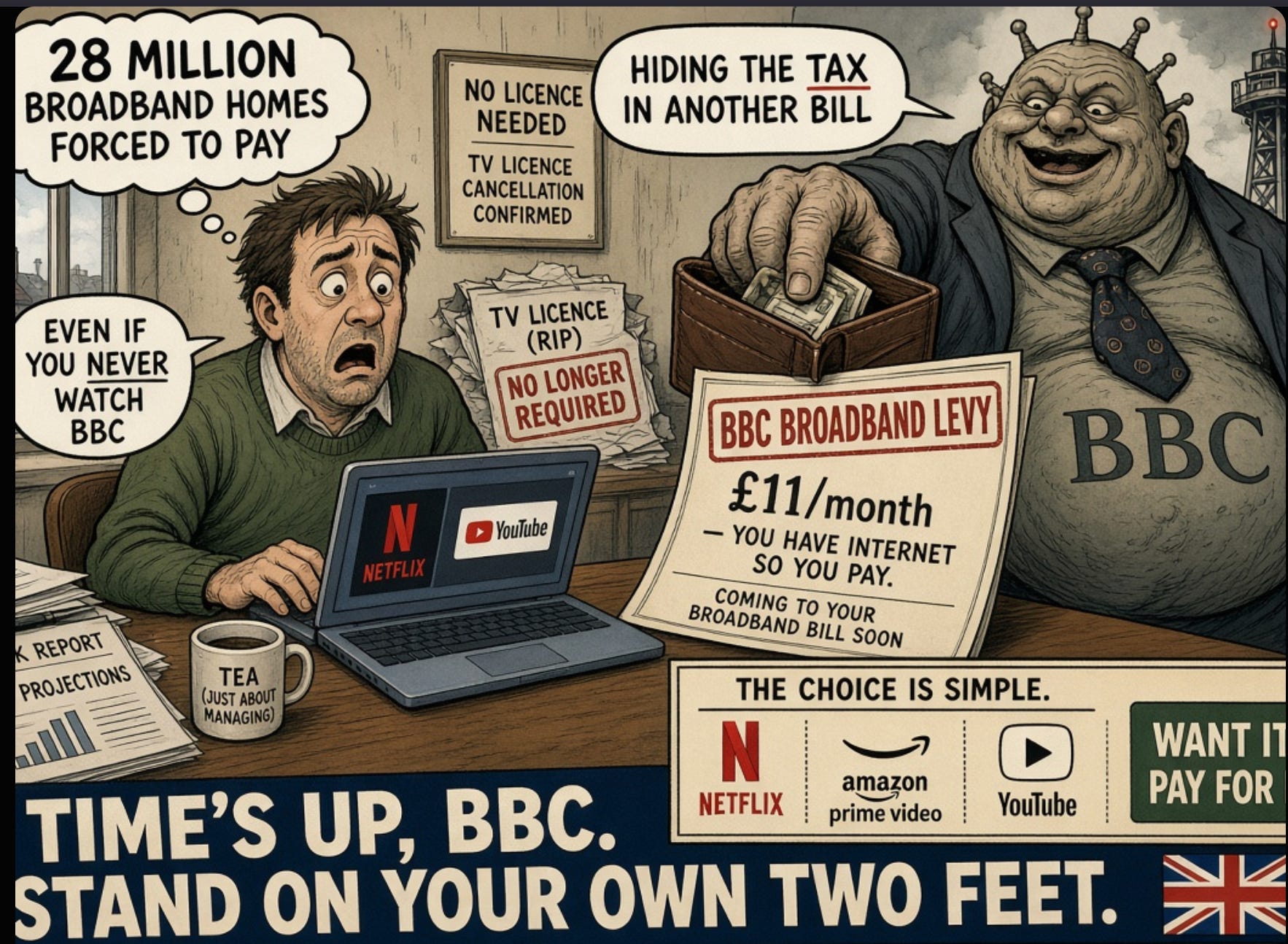
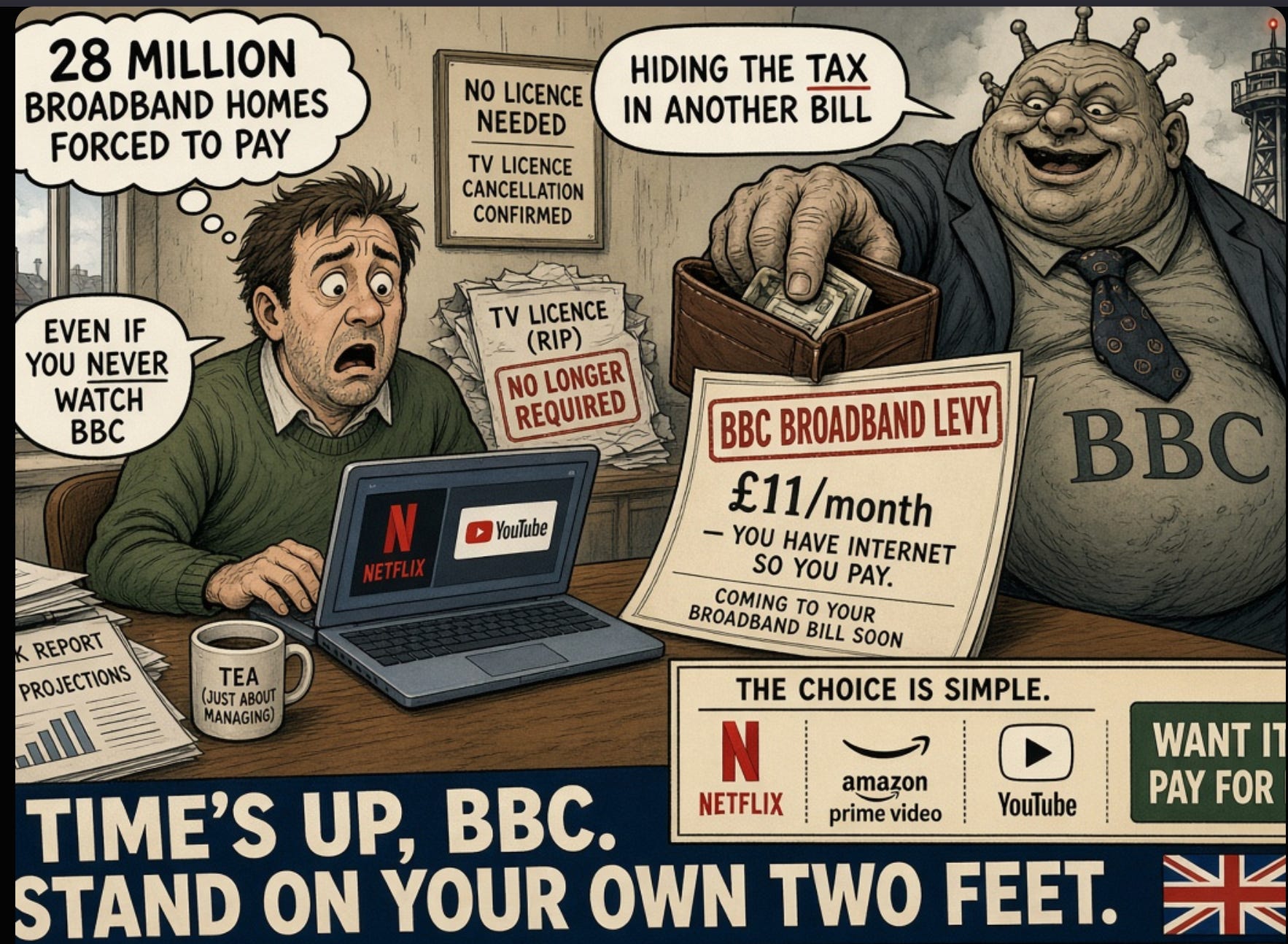
SCRAP THE BBC LICENCE TAX
The David Vance BriefingRead More
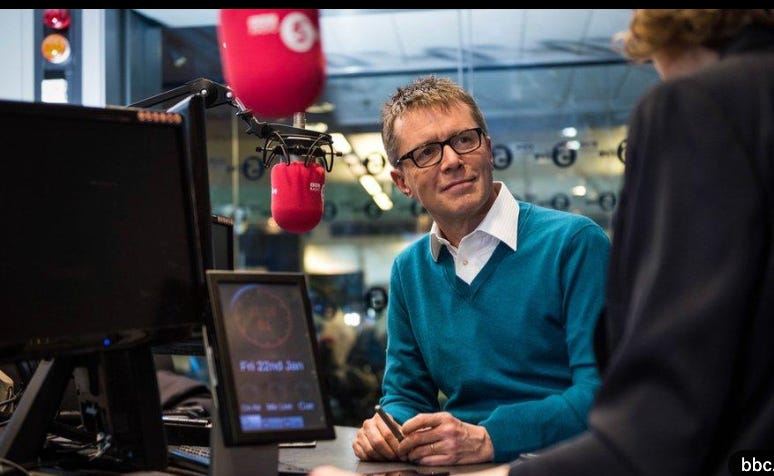
One of the few things that I miss about being banned by the BBC is going on the BBC to explain why the Licence tax is a Neo-Stalinist throwback that should be axed with immediate effect. Nicky Campbell and I used to have some lively chats about that back in the day!
All of which brings me to a proposal now doing the rounds in Westminster.
Scrap the BBC licence fee. Excellent. About time. Right?
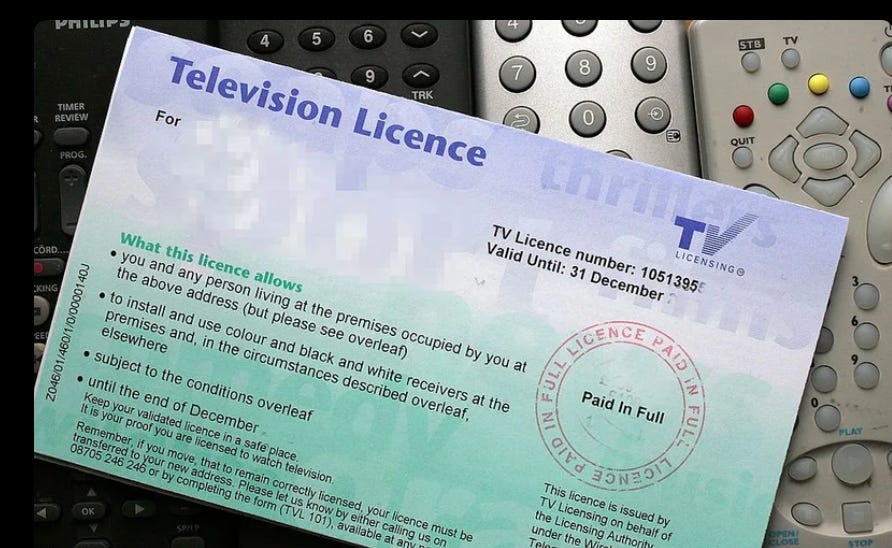
No, because this proposal has a catch. It’s originates from the Social Market Foundation and suggests replacing the £180-a-year licence with an £11-a-month levy on ALL household broadband bills. In other words, you would fund the BBC simply because you have an internet connection — whether you watch the BBC or not!
That isn’t abolishing the licence fee. It is simply hiding it inside another bill.
And then them making us ALL pay for it.
Here are the key facts.
Around 25 million UK households watch the BBC. They are required by force of law to pay the £180 year. Around 28-29 million UK households have broadband. So millions of households would now be roped in to paying for the BBC. £11 per month is an annual £132. If you extend that across the 28 million households, that is £3.69 billion a year. It is a little bit less than the £3.8bn a year they rake in from the Licence Tax but it is fundamentally unfair.
The BBC should receive no compulsory subsidy whatsoever.
I see the current licence fee as an extraordinary historical anomaly. This year households are expected to pay £180 a year for the privilege of watching live television or using BBC iPlayer. The Government just increased the fee to that level in April, btw.
But, and here’s the real kicker, more and more viewers are walking away from it.
Around 3.7 million households now say they don’t require a licence, and another half-million stopped paying last year. This is what is causing panic at the bloated BBC, time has finally caught up with it
Instead of asking how these people can be dragged back into financing the BBC, somebody should ask a more obvious question.
Why are they leaving?
The answer to that is simple. We now live in a world of Netflix, Amazon, YouTube, podcasts, streaming services and millions of independent creators. Almost everything else in the media marketplace operates on one wonderfully simple principle.
If you want it, you pay for it. (Apart from my Substack) If you don’t want it, you don’t.
So why should the BBC be different?
This proposed internet levy makes matters worse. At least under the present arrangements someone who doesn’t watch live television or BBC iPlayer can legally dispense with the licence. Under this proposal, just having broadband would be enough to get you billed. There is NO escape from funding a broadcaster that many of you don’t watch that much, if at all!
Take a moment to consider the principle being established here.
You might just use your broadband for work. You might watch Netflix. Maybe you might spend your evenings watching YouTube. You may NEVER visit the BBC website, listen to BBC radio or watch a single second of BBC television.
Tough. You are going to pay the BBC anyway.
This new proposal would raise around £11 a month through broadband providers, with suggestions that poorer households might receive discounts. Its supporters argue that because 95% of households have internet access, broadband provides an efficient mechanism for financing the Corporation.
That’s the problem. They aren’t interested in making the BBC more appealing to people who have stopped paying; It’s to make SURE avoiding payment is impossible.
If you thought THAT was bad, well, there’s an even worse suggestion being discussed and this one envisages retaining the licence fee and adding a £2.30 monthly “News and Culture Levy” to internet bills.
You couldn’t make it up!!! The News and Culture provided by the BBC is the very worst part of it!
Now I have to add that these ideas are a think-tank proposal, not settled Government policy. The Government’s Charter Review is examining BBC funding, although ministers had previously explicitly ruled out funding the Corporation through general taxation or a household tax.
I think that the core debate is heading in the wrong direction.
The politicians are Westminster keep asking:
How do we guarantee the BBC enough money?
I would ask:
Why should its income be guaranteed at all?
Let the BBC become a subscription broadcaster. Let those who actually value its programmes subscribe as a choice Let it sell programmes internationally. Let it exploit its enormous archive. Let it advertise where appropriate. Let it compete.
Ah, comes the response, that would mean a smaller BBC?
OK, that’s fine. We can cope with that and so should the BBC.
After all, Tesco doesn’t get to impose a compulsory grocery levy on people who shop at Sainsbury’s because its revenues are falling!
The BBC should enjoy no such privilege either.
The BBC started broadcasting in 1922. That was a bygone era and the anomaly of a State Broadcaster has to be addressed. Why can’t we treat the BBC like everyone else?
Make something people want — and persuade them to pay for it.
That’s not “defunding” the BBC. That’s called the free market.
And it’s absolute kryptonite to those in Broadcasting House.
Time’s up, BBC. Stand on your own two feet without trying to put your hand in our wallet.
Enjoyed this? Then don’t just read it — join me.
I publish The David Vance Briefing every morning: independent analysis of the stories, arguments and political battles I believe matter — without the filters of the mainstream media.
Subscribe free and every new Briefing comes straight to you.
And if you value what I do and want to support genuinely independent commentary, become a paid subscriber. You’ll also receive my exclusive Saturday Briefing, where I go much deeper into one of the week’s biggest issues.
Your support keeps this independent!